Christie’s International Real Estate Brussels unveils its first magazine

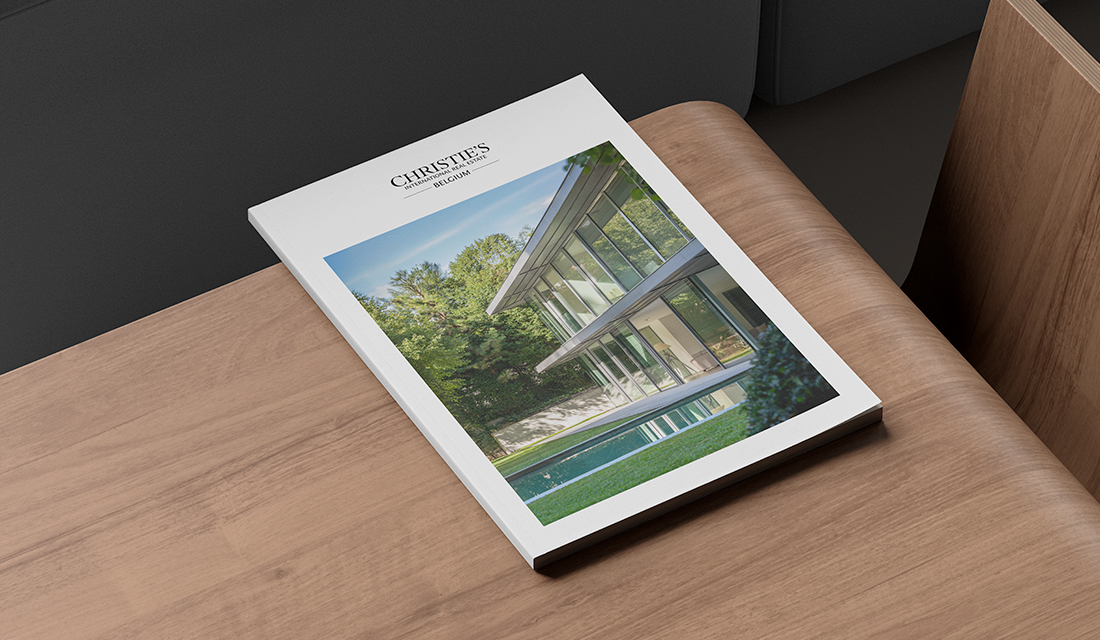
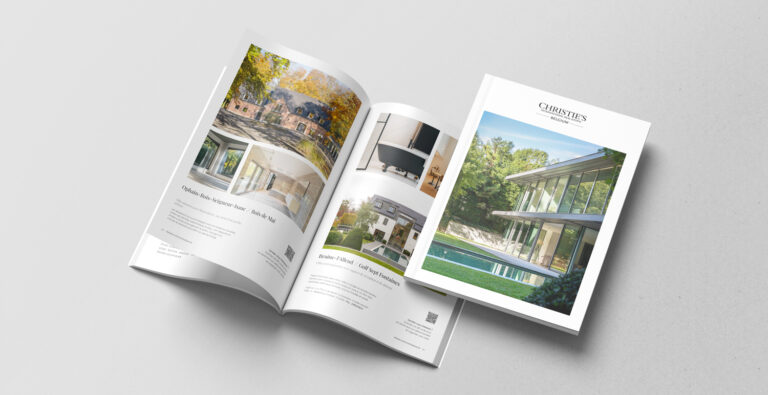
Christie’s International Real Estate Brussels unveils the first edition of its magazine.

Conceived as a clear statement of our philosophy, this publication embodies our vision of exceptional property: an approach rooted in high standards, a discerning eye and a deep understanding of the properties, their architecture and their heritage value.

Through a selection of properties located in Brussels, Wallonia and Flanders, as well as a series of editorial features focusing on art, design, interior architecture and lifestyle, this first issue offers a comprehensive and insightful analysis of the Belgian residential property market.

If you’d like to read the magazine in print, please do pop into one of our offices, where we’ll be delighted to give you a copy.

Prestige is not something you claim for yourself. It is built up over time, through consistency and good judgement.

True luxury real estate is not a question of price

Luxury is often associated with the price tag, as if the amount were enough to define the quality of a property. In high-end real estate, it is almost always the opposite. Price is not the origin. It is the consequence of an already established value.

Price is a consequence, rarely a starting point.

This explains a common situation. Two properties may be priced at the same level, yet elicit very different reactions. One leads to a quick, almost obvious decision. The other attracts attention, then creates hesitation, discussions, adjustments. And sometimes ends up wearing itself out through overexposure.

Value lies in what is not always visible

The square footage, address, quality of finishes, presence of a garden or view are all necessary. But these criteria alone do not explain the lasting value of a property.

What really makes the difference often lies elsewhere, in more subtle elements that are harder to quantify but immediately noticeable to savvy buyers.

Rarity matters. Not the kind that is decreed, but the kind that stands the test of time. An irreplaceable location, unique architecture, a configuration that current constraints make almost impossible to replicate.

Provenance also plays a central role. The history of a place, its context, what it has been through, what it embodies. As in art, this dimension strongly influences the perception of value, far beyond technical characteristics.

Consistency is a hallmark of luxury

A luxury item is not an accumulation of effects. It is a coherent, legible, controlled whole, where nothing is gratuitous.

When something seems off —an overly ostentatious renovation, forced staging, inconsistent positioning— buyers notice it immediately, even if they don’t always say so.

Buyers are not looking for an opportunity

The clients we work with are not looking for a good deal. They are looking for a clear-cut asset. A property that makes sense today and will remain relevant tomorrow, regardless of cycles and trends.

At this level, the decision is not only rational. It is also linked to a form of obviousness. A property that is fair, in its place, at the right level, in the right narrative.

Overexposure weakens perception

Overexposure is detrimental to luxury. Anything that is shown too much, pushed too far, or explained too much loses some of its power.

True luxury does not need to convince. It is recognisable. And very often, it is decided upon in a space of trust and discretion.

Value precedes price

In a sometimes turbulent market, it is almost always the same assets that hold their value. Those that have been designed and passed on as heritage assets, not as products.

The price eventually aligns. The value, however, was already there.

The value of a property is not only measured in square metres

At Christie’s International Real Estate Belgium, we know that every property tells a story. Valuing a property is therefore much more than just determining its price: it is about understanding its unique character, architectural coherence, relationship with light and surroundings. In a Belgian market with many nuances, our mission is to provide every owner with a fair, substantiated and experience-based assessment. That is how we approach the highly precise art of property valuation.

How do we value your property in Belgium?

When you, as the owner, are considering selling or letting your property, the first step is crucial: the valuation.

In Belgium, where dynamics differ between Flanders, Wallonia and Brussels, an accurate and nuanced estimate forms the basis for a successful real estate strategy.

An approach based on expertise

At Christie’s International Real Estate Belgium, we never consider a valuation to be a simple formality, but rather a genuine expert task.

Each estimate is based on a rigorous methodology, which rests on three pillars:

  • the analysis of objective and verifiable data,
  • a thorough and up-to-date knowledge of the local market,
  • a good understanding of the expectations of Belgian and international buyers.

We systematically enrich this approach by comparing it with recent transactions and properties in our current portfolio, thereby ensuring realistic and consistent positioning.

The fundamental criteria

We begin the analysis by examining the essential parameters: the location and immediate surroundings, the surface area, the orientation, the quality of the terrain, the general condition of the building, the energy performance and the potential for development.

In Flanders and Wallonia, they are interpreted by our local teams, who are familiar with the specific characteristics of their market. In Brussels, these criteria fit into an urban and international context.

Qualitative criteria and emotional value

Technical data alone is not sufficient for unique properties.

The architecture, the living space, the light, the cohesion of the materials, the charm and the emotion that a place exudes have a major influence on the perception of its value.

In addition, there is another essential factor: emotional value.

It reflects what the product evokes, its rarity, the personal projection it elicits. This subtle interpretation of the market is based on experience and intuition. And that is where our expertise comes into its own.

Estimating is a team effort

Each property is thoroughly inspected and receives an initial individual valuation.

This estimate is then re-analysed by our other real estate agents during our weekly internal team meetings.

This approach allows different perspectives to be compared, positioning to be further refined, and the strategy to be adjusted to anticipated market reactions.

A strategy determined in consultation with the owner

When multiple scenarios arise, we explain them in a clear and substantiated manner: hypotheses, challenges, implications.

Together with you as the owner, we determine the most suitable price and strategy for your property and the intended objectives.

The right price, a strategic positioning

Setting a selling price is primarily a matter of determining a strategy. An overly ambitious price can dampen interest and slow down sales. A price that is too low can influence the perception of the property and damage its actual value.

It is our role as real estate agents to provide a well-founded, coherent and defensible valuation based on concrete data, expert analysis of the Belgian property market and a thorough understanding of the perceived value.

A tailor-made approach, true to our values

Every property is unique, and so is every project.

Our approach therefore remains tailor-made, faithful to the values of extensive expertise, discretion and excellence that characterise Christie’s International Real Estate Belgium.

If you would like to know the value of your property and determine the most appropriate strategy for selling it, our teams are at your disposal for a confidential and non-binding valuation.

Please contact us via this link.

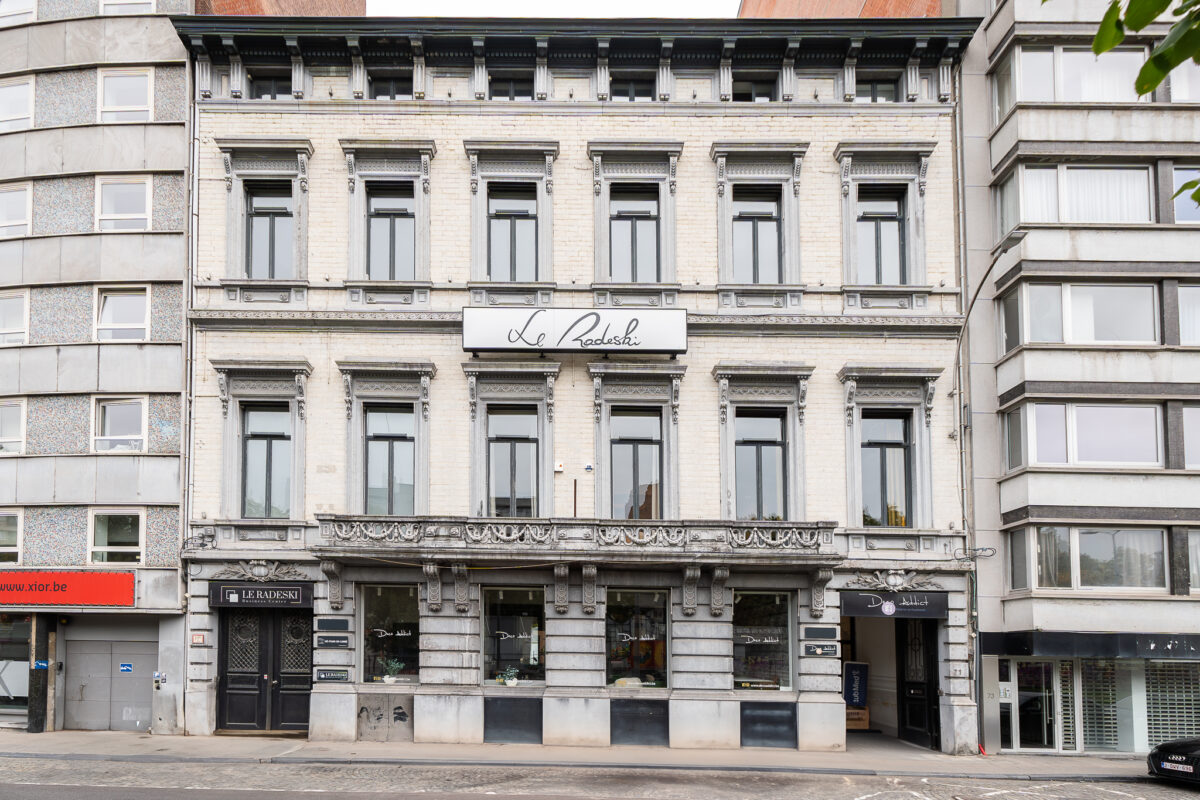
The Radeski Hotel: an ode to architectural excellence in the heart of Liège

On Boulevard d’Avroy, where the murmur of the Meuse River mingles with the rustling of the park’s century-old lime trees, stands an architectural gem that time has only served to embellish for nearly a century and a half. The Radeski Hotel is not just a building: it is a statement of intent, a manifesto in stone and wrought iron that bears witness to an era when architecture was an expression of refinement and social prestige.

A history written in stone

The history of the Radeski Hotel began around 1875, when the Radzitsky family of Ostrowick, an illustrious line of Polish nobility, decided to make their mark on the Liège landscape. At this pivotal moment in the Belle Époque, when Europe was experiencing its last hours of imperial grandeur, the family chose Boulevard d’Avroy – an iconic thoroughfare created forty years earlier when the Avroy Canal was filled in – to build what would become one of the most remarkable private mansions in the fiery city.
The choice of location was not insignificant. The Boulevard d’Avroy was then, as it is today, one of the most sought-after addresses in Liège, linking the historic centre with the new bourgeois neighbourhoods that were flourishing along the Meuse. It was here that visionary architects, patrician families and renowned artists rubbed shoulders, shaping an avenue that would become a privileged witness to the golden age of Belgian eclectic architecture.

Architecture as an art of living

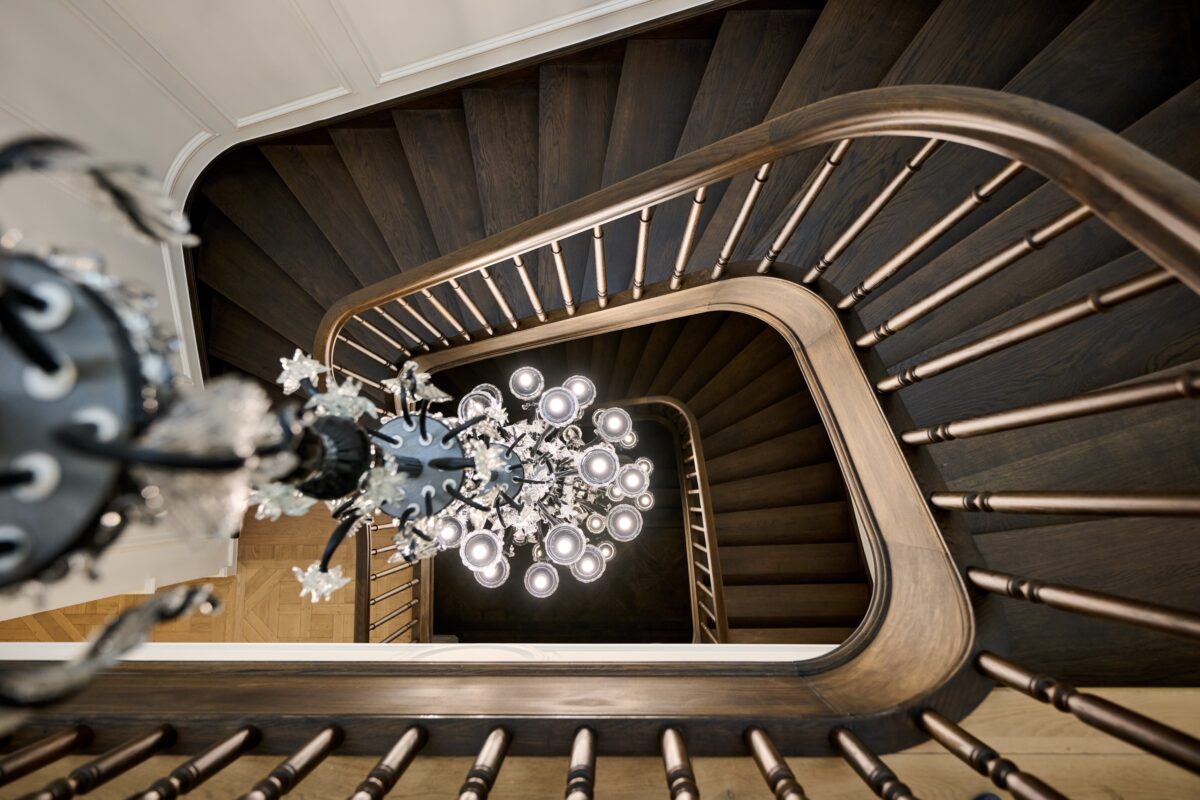
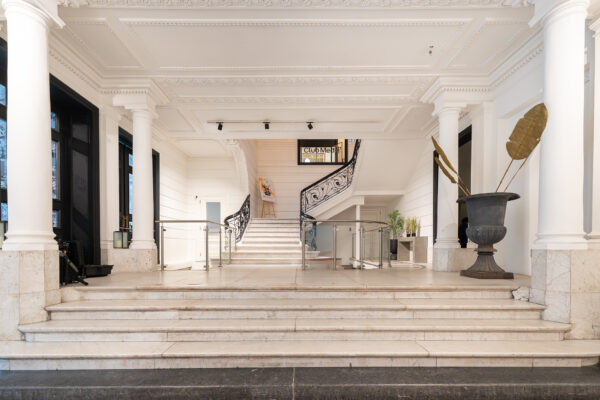
Spanning 2,200 square metres across four majestic floors, the Radeski Hotel embodies the architectural expertise of the late 19th century at its most sublime. As soon as you cross the threshold of this exceptional residence, you are struck by the grace of its grand staircase, a true centrepiece that rises to the upper floors in a choreography of marble and wrought iron.
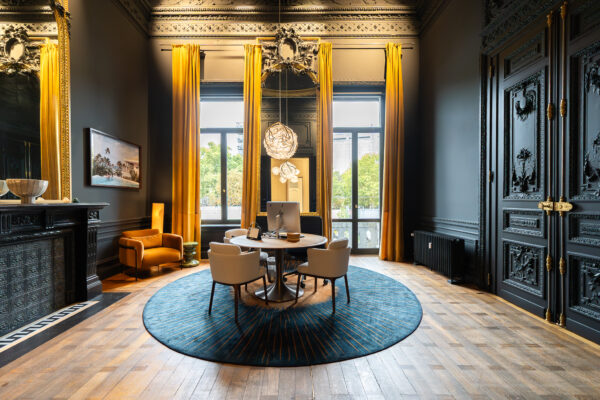
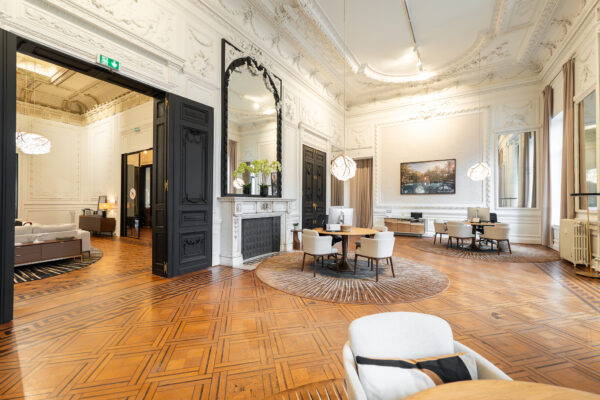
The volumes are breathtaking. High ceilings adorned with delicate mouldings, a series of rooms with harmonious proportions, natural light filtered through imposing windows: every architectural detail bears witness to an era when buildings were not only constructed to be lived in, but to enhance everyday life. The rare architectural features that can be discovered at every turn (whether original woodwork, monumental fireplaces or finely carved stucco) tell the story of exceptional craftsmen who devoted their expertise to the construction of this urban palace.

A cultural and creative renaissance

Far from becoming stuck in nostalgia for the past, the Radeski Hotel has successfully navigated the decades by constantly reinventing itself. After serving various purposes throughout the 20th century, this monument underwent a bold transformation in the early 2010s, driven by visionaries who understood that heritage and modernity are by no means mutually exclusive.
The transformation of the hotel into an ecosystem dedicated to art, creativity and entrepreneurial excellence is a model for heritage conversion. Today, the Radeski is home to a constellation of prestigious companies that share the same commitment to excellence: Club Med, whose hedonistic philosophy is perfectly echoed in the elegance of the premises; Braconnier Agency, a communications and branding agency where creativity flourishes in these inspiring spaces; Cocobolo, an agency specialising in digital communications and social media management, which brings a new and connected energy; Les Films du Carré, film producers driven by a contemporary artistic vision; and Aromates, a creative studio dedicated to animated films, which combines imagination and high standards in a historic setting.
This alchemy between 19th-century heritage and 21st-century entrepreneurial dynamism makes the Radeski much more than just an office building: it is a place of life, exchange and creation where the past dialogues harmoniously with the present.

At the heart of exceptional Liège

The location of the Radeski Hotel is one of its most valuable assets. Situated on Boulevard d’Avroy, this address offers an exceptional quality of life in the heart of the city. Avroy Park, redesigned in the 19th century by landscape architect Édouard Keilig, spreads out its greenery just opposite, offering a haven of tranquillity where you can stroll in the shade of century-old trees.
A few steps away are Liège’s major cultural institutions: the Opéra Royal de Wallonie, the La Boverie museum, and the Place Saint-Lambert with its urban buzz. The proximity of the Guillemins station (a contemporary architectural masterpiece by Santiago Calatrava) places the Radeski at the perfect intersection between historical heritage and modernity, between Liège tradition and international connections.
This privileged location makes Boulevard d’Avroy one of the few European thoroughfares where exceptional architectural heritage, generous green spaces and urban dynamism coexist so naturally. Every year, the famous October Fair transforms the boulevard into the scene of a centuries-old popular festival, reminding us that this prestigious location has never ceased to be the beating heart of Liège life.

An investment in excellence

Marketed exclusively by Christie’s International Real Estate, the Radeski Hotel represents a rare opportunity for investors and entrepreneurs seeking an exceptional space. With 2,200 square metres spread over four floors, this property offers particularly attractive development prospects. Whether it is to establish a prestigious head office, create a luxury hotel concept, develop a cultural space or maintain its current role as a creative ecosystem, the possibilities are numerous and promising.
One of the major advantages of this mansion is the possibility of raising the building, thus offering significant expansion capacity for an ambitious project. This opportunity, rare for a heritage property of this quality, allows for a substantial increase in floor space while preserving the architectural integrity of the existing building.
The flexibility of the spaces, combined with the prestige of the address, the architectural beauty of the building and the potential for vertical extension, make it an exceptional property on the Belgian property market. The generous volumes allow for multiple configurations, while the heritage features guarantee lasting value in a market where authenticity and history are increasingly sought-after criteria. For visionaries capable of combining respect for heritage with contemporary ambition, the Radeski Hotel offers an exceptional canvas on which to write the next chapter of an already illustrious history.

The legacy of an era, the ambition of a future

The Radeski Hotel embodies that rare alchemy between respect for heritage and contemporary vision. In an era where architecture often tends towards standardisation, this 19th-century gem reminds us that there is another way: that of timeless excellence, creative audacity and the transmission of a heritage to be preserved.
For those who can see beyond the simple stone, the Radeski Hotel tells the story of Liège, an industrial city that has become a cultural metropolis, a thousand-year-old city resolutely turned towards the future. It bears witness to architectural expertise that continues to inspire current generations, to an elegance that never goes out of fashion, and to an aristocratic ambition that today finds its expression in creative entrepreneurship and professional excellence.

View this property on our website via this link.

La Maison Saint-Cyr: the Baroque audacity of Gustave Strauven

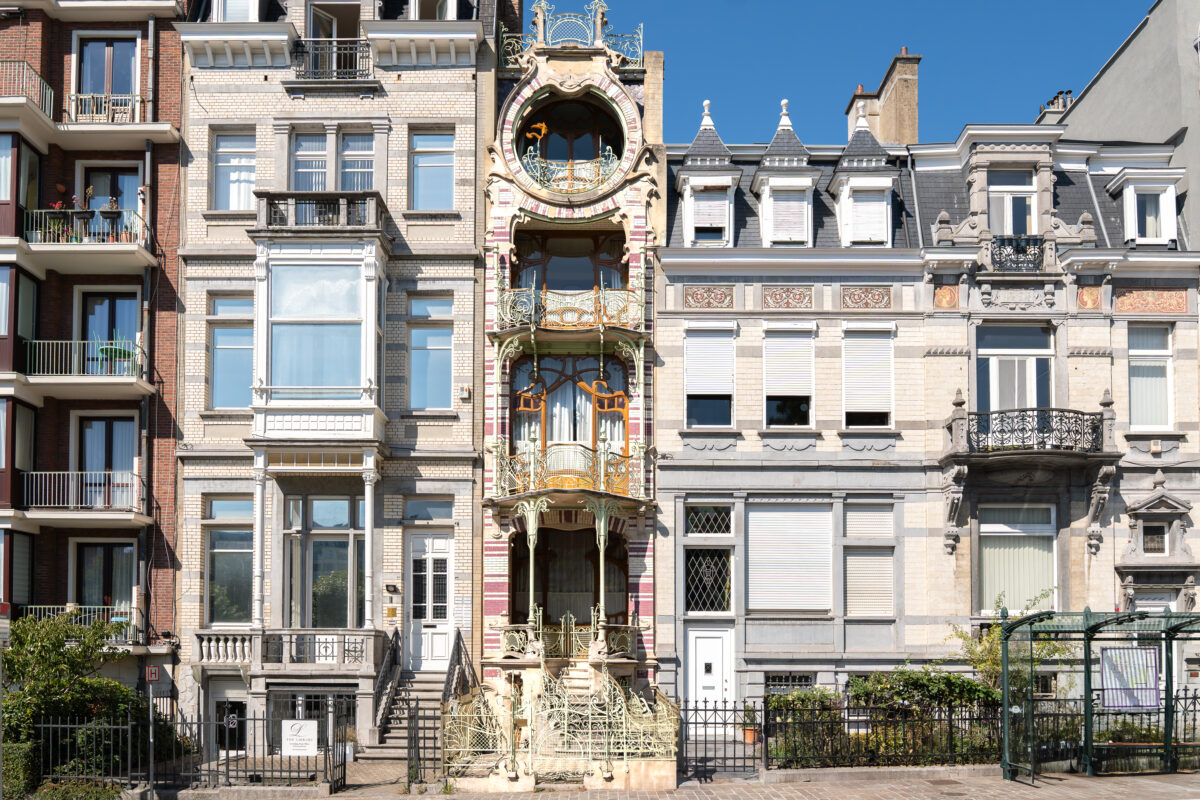
On one of Brussels’ most elegant urban thoroughfares, where Ambiorix Square spreads its foliage like an English garden, stands a façade that defies all measure. Only four metres wide, but so richly ornamented that it seems to contain the entire soul of the Belle Époque.

When Art Nouveau reached its peak on Ambiorix Square

In 1903, Gustave Strauven, a prodigy of Brussels architecture at only 23 years of age, created one of his most breathtaking masterpieces here. The Maison Saint-Cyr embodies “Baroque Art Nouveau”: a decorative extravaganza where polychrome bricks compose a chromatic symphony and floral ironwork winds its way with the sensuality of wisteria.

Its sale naturally aroused the enthusiasm of the Belgian media, from RTBF to La Libre, VRT NWS and Trends Tendances, all hailing the rare opportunity to acquire one of the finest examples of European Art Nouveau.

A restoration in the form of a tribute

Between 2008 and 2019, the residence underwent restoration work that was as much an archaeological quest as it was a declaration of love. The result: 436 square metres where heritage dialogues with contemporary comfort without ever betraying the spirit of the place.

Crossing the threshold on the main floor, you enter a hall where light plays with the stucco and woodwork as if in a painting by Fernand Khnopff. The main living room reveals itself, majestic, supported by dizzyingly high ceilings.

The art of vertical living

On the first floor, the former dining room retains the memory of the Chinese salon it once was, with its orientalist flourishes so beloved at the time. Today, it connects to a kitchen featuring a La Cornue stove, a masterpiece of French culinary craftsmanship.

The second floor houses a spacious 40-square-metre master suite, where the bedroom and palatial bathroom form an intimate retreat. Higher up, two attic bedrooms each have their own shower room, embodying that Brussels elegance that knows how to turn a confined space into a precious setting.

On the fourth floor, a multipurpose room opens onto a large panoramic terrace. Facing the leafy Square Ambiorix, the view takes in one of the most beautiful urban landscapes in Europe.

Light as a guiding principle

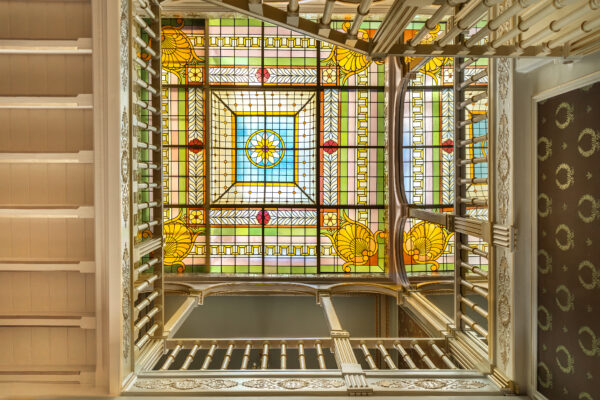
The true genius of this house lies in its luminous verticality. The stairwell under the glass roof and the glass walkways transform movement through the house into an aerial promenade. It is a house of light, a prism of a house where each level benefits from rare natural light.

The semi-basement offers a secondary kitchen and a versatile space with multiple possibilities: wine cellar, cinema room, artist’s studio.

A living heritage

Listed as part of Brussels’ architectural heritage, Maison Saint-Cyr is not a static museum. It is a living residence that embraces contemporary life while preserving its identity. It belongs to that rare category of architecture which, through its visionary power, remains eternally modern.

Living here means inhabiting a work of art and writing a new chapter every day in the history of one of the most daring manifestos of European Art Nouveau. A rare privilege, now offered exclusively by Christie’s International Real Estate.

Christie’s International Real Estate continues its expansion in Belgium with a new office in Waterloo

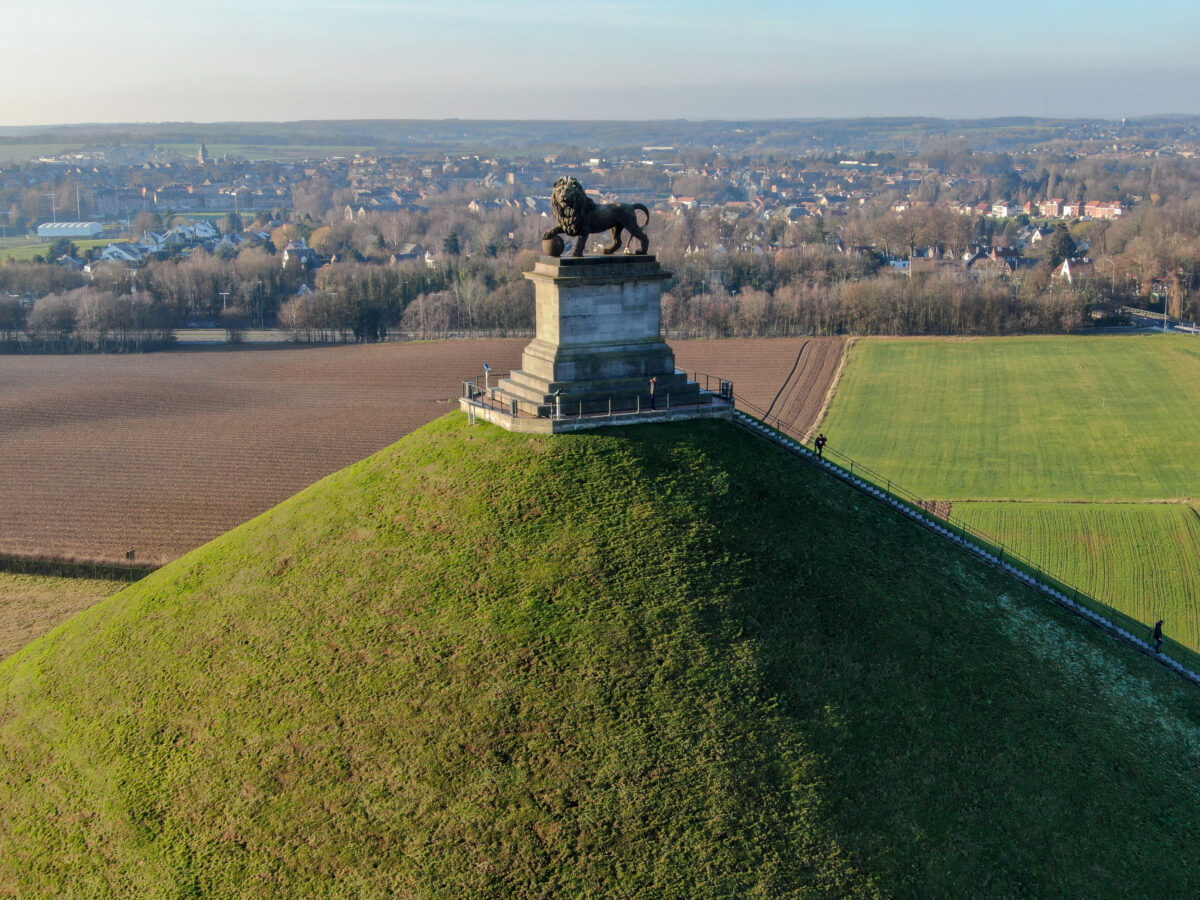
Two years after entering the Belgian market and one year after opening its Brussels office, Christie’s International Real Estate continues to consolidate its presence in the country with the opening of a new office in Waterloo, a strategic location in the heart of Walloon and Flemish Brabant. ‘We are continuing our expansion as planned since entering the Belgian market,’ explains Jean-Marc Delcroix, Managing Partner of Christie’s International Real Estate Brussels.

Brussels, Antwerp, and now Waterloo. Christie’s International Real Estate Belgium, represented by Hillewaere Group, is taking a new step in its development in Wallonia with the opening of an agency in Waterloo. This new office reinforces the global luxury real estate network’s ambition to offer local, excellent and trustworthy service to its clients in the most sought-after regions of Belgium.

A takeover of the former Barnes Brabant agency in Waterloo

This office, which is the result of the complete takeover of the former Barnes Brabant agency in Waterloo, includes its entire property portfolio and part of its existing team.
Nicolas Frings will personally oversee the transition of this business and will then continue his involvement with Christie’s International Real Estate Belgium as a brand ambassador.

It is with great pride that I will accompany this transition as ambassador. I warmly congratulate the team on this wonderful integration into the Christie’s family. I am certain that this new stage will open up great prospects,’ said Nicolas Frings, former director of the former Barnes Brabant agency.

Drawing on the local expertise of its agents and the international authority of the Christie’s brand, this takeover opens up new opportunities for clients seeking exceptional properties, while benefiting from tailor-made support that is both local and global. The agency will cover Walloon Brabant and the municipalities south of Brussels.

Belgian development enters a new phase

With offices now operating in Brussels, Antwerp and Waterloo, Christie’s International Real Estate Belgium is firmly anchoring its growth strategy in the main hubs of the luxury property market in Belgium. This new location also marks a strategic shift towards Wallonia, with a stronger presence in a population centre with high potential and strong residential appeal.

The integration of the Waterloo office represents much more than geographical expansion. It is a clear commitment to our clients in the region, offering them a local, high-end service that is faithful to Christie’s standards,’ explains Jean-Marc Delcroix, Managing Partner of Christie’s International Real Estate Brussels.

This opening marks an important milestone, but not the last. Christie’s International Real Estate Belgium continues to strengthen its presence in key markets in Belgium step by step.

First steps in Wallonia for the Hillewaere Group

The opening of the Waterloo office marks a new milestone not only for Christie’s International Real Estate, but also for Hillewaere Real Estate. The Hillewaere Group, led by entrepreneur Roel Druyts, has been granted an exclusive licence for Belgium by Christie’s International Real Estate. Since its creation in 2002, the estate agency had only been active in Flanders.

“In concrete terms, properties valued at over €1 million will be offered under the Christie’s banner. At the Waterloo agency, we will also be offering other properties from Hillewaere Real Estate. This marks our first steps as a group in the French-speaking part of Belgium,” explains Bart Van Delm, Managing Director of Hillewaere Real Estate & Christie’s International Real Estate Belgium.

Christie’s International Real Estate Belgium Continues Its Growth – New Establishments in Wallonia

Since our establishment on Avenue Louise, our presence in Brussels has continued to strengthen. Today, we take a new step by expanding our scope to the provinces of Liège and Luxembourg, two regions with undeniable residential qualities.

Patrick Cousin, Attuned to the East of the Country

In eastern Belgium, Patrick Cousin leads our operations in the provinces of Liège and Luxembourg. Originally from Liège, where he currently resides, he combines an intimate knowledge of the region with solid experience in entrepreneurship and marketing. Having transitioned to the local real estate sector, he joins our firm to blend this rooted expertise with the international reach of our network. He supports each client with precision, attentiveness, and discernment.

A natural evolution driven by conviction

This expansion responds to a growing demand from property owners seeking personalized and discreet support beyond the capital’s boundaries. Liège and Luxembourg attract with their quality of life, space, and accessibility. Our strategy is built on a core principle: a deep understanding of the region by experts who live and work there.

Our ambition is to showcase properties with unique character: stately homes, charming residences, and contemporary designs. Through the international reach of the Christie’s network, we provide these properties with the visibility they deserve. Our agents do not merely sell; they tell a story, highlighting what makes each property unique.

This new establishment marks a significant milestone for Christie’s International Real Estate Belgium: it reflects our commitment to delivering tailored service, wherever it may be, with the same level of dedication and care.

Our ambition is to bring visibility to truly distinctive homes – whether elegant historic estates or refined contemporary architecture. Through the Christie’s network, we give these properties the international exposure they deserve. Our agents go beyond transactions: they reveal the essence of each residence.

This expansion reflects our continued commitment to delivering thoughtful, high-level service across Belgium, always grounded in local expertise and the values that define Christie’s.

Subjecting French SCIs and Similar Structures to Belgian Transparency and the Newly Introduced Exit Tax

The so-called “Cayman Tax” is a Belgian fiscal measure (also referred to as a “look-through tax”) that has been in force since 2015 and aims to tax certain foreign legal constructions held by Belgian residents. The measure is specifically intended to combat tax avoidance by creating transparency over assets held through foreign entities. The scope of this tax has already been amended several times, most recently on December 22nd, 2023, and is likely to change again soon.

A frequently recurring discussion point is whether French real estate structures such as the Société Civile Immobilière (SCI) falls within the scope of this Cayman Tax for Belgian taxpayers, for example, those with French roots (who moved from France to Belgium for various reasons, such as tax optimization or as a stopover en route to Monaco) or traditional Belgian residents with a holiday home in France.

Although an SCI is a common and legitimate structure in France for managing real estate, it can sometimes pose tax risks when used by Belgian taxpayers.

What is an SCI?

An SCI is a French company with legal personality (often) without real commercial activity, mainly used to hold or manage real estate. In principle, it is fiscally transparent in France, meaning that its income is directly attributed to its shareholders in proportion to their shareholding.

Applicability of the Cayman Tax

The Cayman Tax is based on the principle that certain “legal constructions” are deemed fiscally transparent, which results in the Belgian ultimate beneficiary being taxed directly on the entity’s income as if they had received it themselves. According to the law, this includes trusts, certain foreign companies and foundations, as well as other entities without legal personality or those benefiting from favourable tax regimes.

According to the Belgian Minister of Finance, SCIs will also fall under this regime starting from January 1st, 2024 (thus relevant for the 2025 tax return), although little explanation has been provided as to the rationale or implementation. This position cannot simply be accepted without nuance: an SCI can only (sometimes) qualify as a legal construction if it fails to meet the minimum tax condition (the so-called “1% test”), calculated according to Belgian tax principles. Without going into detail, this could mean that if the real estate is not rented out and is, for example, made available free of charge to shareholders or their relatives, the tax authorities may try to qualify the SCI as a transparent legal construction.

Risks for Belgian Taxpayers

The greatest risk is that Belgian shareholders of an SCI, despite existing double tax treaties that often provide for exemption (in Belgium) of capital gains realized in France on shares or real estate, may suddenly become subject to a 30% dividend tax.

The new Cayman Tax proposal also includes an “exit tax”, which simply put, means that the founder of a legal construction will be taxed when relocating their tax domicile abroad: the tax authorities will assume that such a move triggers a deemed distribution of the (latent) capital gains of the legal construction—even if nothing is actually sold or paid out!

Attention and Proactivity Required

The legislation surrounding the Cayman Tax is complex and constantly evolving, with unclear administrative positions and disagreements in case law and literature. Not all texts are final at this time, and it is therefore crucial to closely monitor developments so that existing or future structures or family situations can be adjusted or aligned as needed.

This is not only relevant for individuals who hold property in France through an SCI but also for a range of other popular structures that may now fall under the Cayman Tax, such as the Dutch STAK (foundation administration office) or so-called “fonds dédiés” (e.g., Luxembourg SICAVs or their sub-funds).

There are often new or local alternatives to these traditional structures that are not subject to Cayman scrutiny and which therefore deserve serious consideration going forward.

Legal and tax advice is essential when setting up and managing such structures. Failure to comply with reporting obligations or misjudging the tax consequences can lead to unpleasant surprises and financial penalties.

What is it worth | Jewels

A Closer look at today’s market

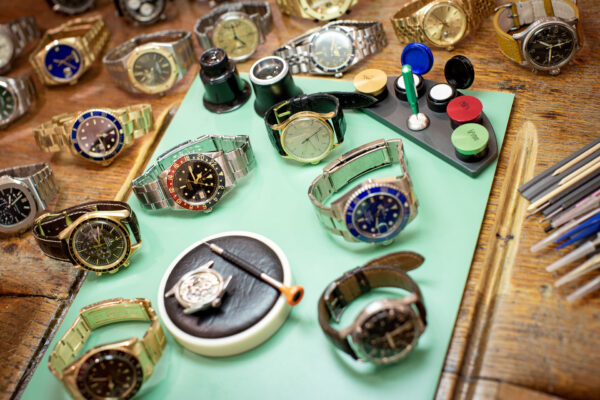
Collectors are on the lookout for craftsmanship, have opted for a more traditional or patrimonial approach to luxury, valuing the flavours of certain eras, like Art Deco, and are even more interested in the history, design and revolution of objects and their provenance.

The appetite for unique and historic diamonds is growing, the commercial diamond sector is rather soft at the current stage and prices seem to stagnate. Fancy Deep Blue diamond, are still in very high demand and this was witnessed this May when an emerald-cut gem of 6.24 carats, mounted by Boucheron was sold after competitive bidding for over five minutes, finally selling for CHF10,640,000. It entered the Moussaieff private collection.

Sapphires  and rubies have shown great results in this first half of the year, especially pink sapphires which have already shown increased results throughout 2023. Emerald prices are rather stable since the beginning of this year, with top quality stones continuously attracting higher prices.

The pearl market is solid with especially high prices achieved for pearls of top quality, which is also in line with the thriving Middle Eastern market where many of the top buyers reside.

Signed jewelry from important historical brands such as Cartier, Van Cleef & Arpels, Tiffany & Co., Bulgari… are consistently attracting a lot of interest and reaching high prices  signature, date and uniqueness playing an important role in the price. Especially signed pieces from the 70s and 80s have shown remarkable results in recent auctions.

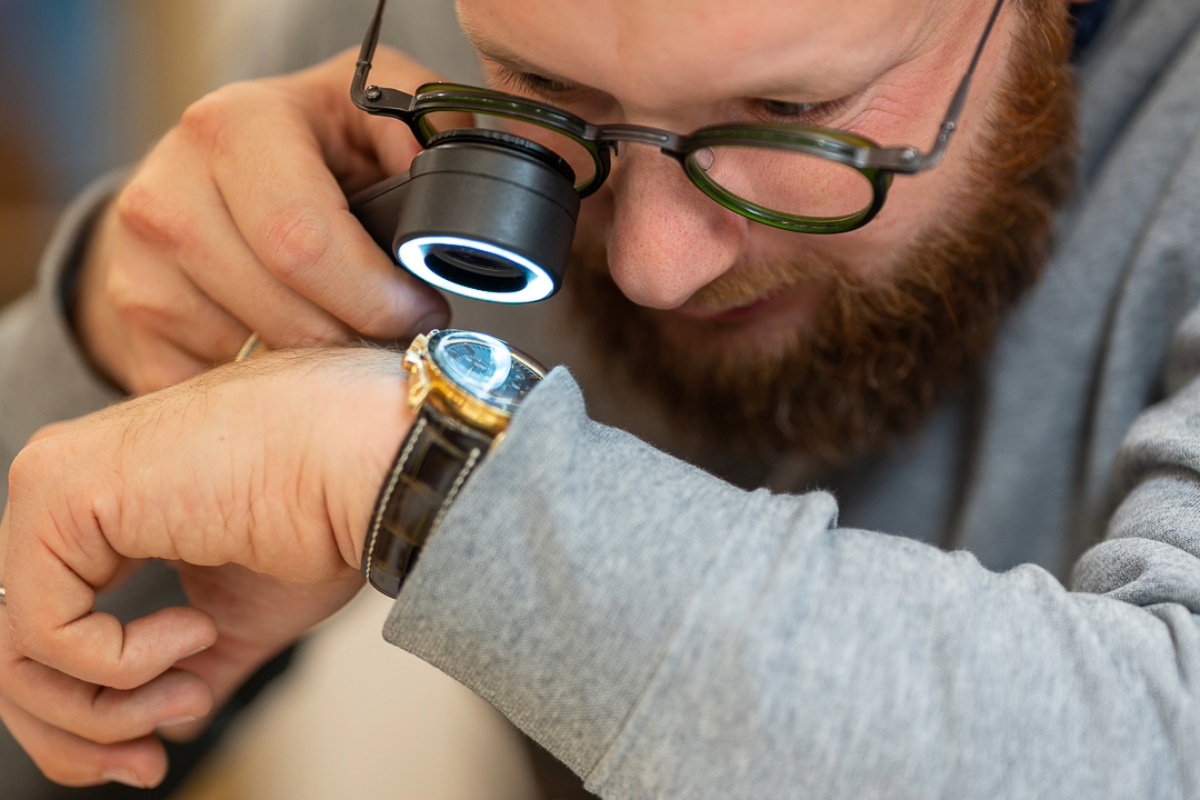
But one of the most desirable remains JAR. There’s no shop sign or window display at 7 Place Vendôme in Paris — nothing that hints at the brilliance within, beyond three discreet letters, JAR. Yet for jewellery collectors, this is a place of pilgrimage: the atelier of the acclaimed contemporary jewellery designer Joel Arthur Rosenthal. The man who gives no interviews  produces fewer than 100 pieces a year and nobody can just buy a piece of jewellery at JAR – he selects the owners for his pieces. This May in Geneva a private collection of 21 creations designed by JAR realised CHF 5,943,830 and was led by the exceptional “Apricot Blossom” bangle, selling for CHF2,374,258, nearly ten times its pre-sale estimate. The sale closed with an extraordinary diamond necklace by JAR, selling for nearly five times the pre-sale estimate, CHF2,162,500.

Your jewels box

Your private jewels box might contain pieces that would respond positively to today’s market requirements. Christie’s sells jewels since over 250 years and is the market leader in this category for 26 consecutive years. Christie’s  has been entrusted with many important private collections, including those of HRH The Princess Margaret, Elizabeth Taylor, Mrs. Lily Safra, and many others. And we would love to be your partner of choice to value your jewels.

Althéa Hanshaw Haft brings nine years of experience to the job as Jewellery specialist and is part of a 25+ Christie’s team of specialists located worldwide. Althea is the lead jewels specialist for Belgium, Luxembourg and the Netherlands. Based in Geneva, she will be visiting the region on a regular basis. In the Brussels office Marie van Ackere would be your first point of contact for any questions around buying or selling jewels at Christie’s, might it be in a live or online auction or via private sales.

Urban Planning Permit Reform in Wallonia: A Long-Awaited Simplification from May 1, 2025

Good news for property owners, investors, and real estate professionals in Wallonia: from May 1, 2025, new rules will significantly simplify procedures related to urban planning permits. This reform of the Code of Territorial Development (CoDT) aims to reduce administrative burdens, speed up projects, and encourage both renovation and the energy transition. CoDT ) aims to reduce administrative burdens, speed up projects, and encourage both renovation and the energy transition.

Which works will no longer require a permit?

The list of acts and works exempt from permits is expanding considerably. From May 1, 2025, you will no longer need to apply for an urban planning permit for many everyday minor works, provided certain rules are respected (notably, not being located in a flood-risk area). Among the new exemptions:

  • Home extensions: Enlargements, verandas, garden sheds, and technical rooms become more accessible administratively.
  • Energy installations:Installation of solar panels (on roofs or on the ground, depending on the area) and heat pumps, including geothermal pumps up to 500 meters deep.
  • Mobility spaces:Creation of bicycle or scooter shelters and covered parking up to 60 m², both on private and public land.
  • Private swimming pools: Construction of a swimming pool without a permit under certain conditions.
  • Small improvements: Installation of shutters, railings, or fences not visible from public spaces, installation of air conditioners, creation of retaining walls up to 1 meter high.
  • Horeca sector: Installation of seasonal terraces up to 100 m² for hospitality businesses.
  • Others:Temporary installation of measuring masts for wind turbines, felling of trees in urgent cases (with the mayor’s prior agreement), opening or modification of roof windows on flat roofs, restoration of riverbanks after natural disasters.

A time-saving and flexible reform for all

The goal of this reform is twofold: to offer more flexibility to citizens and professionals, while reducing the burden on municipal and regional administrations. Procedures are simplified, waiting times are shortened, and full digitalization is planned for September 2025, promising a fully paperless process in the future.

“This reform will have a positive impact not only on applicants and their architects but also on municipal and regional urban planning officers. It will reduce the amount of paperwork and eliminate repeated requests for information thanks to the ‘Only Once’ principle.”
– François Desquesnes, Walloon Government

Important: Conditions apply

Not all exemptions are automatic. Some works are still subject to restrictions, especially in flood-risk areas or for constructions that may impact public spaces or heritage sites. It is therefore essential to check the specific situation of your property before starting any work.

Why is this reform a major step forward?

  • Easier real estate projects:Less paperwork, less waiting, more responsiveness for both individuals and professionals.
  • Promotes energy renovation: Solar installations and heat pumps are now more accessible, supporting Wallonia’s energy transition.
  • Modernizes administration: Preparation for complete digitalization of files, for greater efficiency and transparency.

In summary

The CoDT reform, effective May 1, 2025, marks a turning point for real estate in Wallonia. Many everyday minor works can be carried out without a permit, provided the applicable rules are followed. This administrative simplification represents a significant time saver and an opportunity to enhance and modernize your real estate assets while contributing to the energy transition.

For any questions or projects, don’t hesitate to contact our Christie’s International Real Estate team: we are here to support you every step of the way in this new, simplified framework!