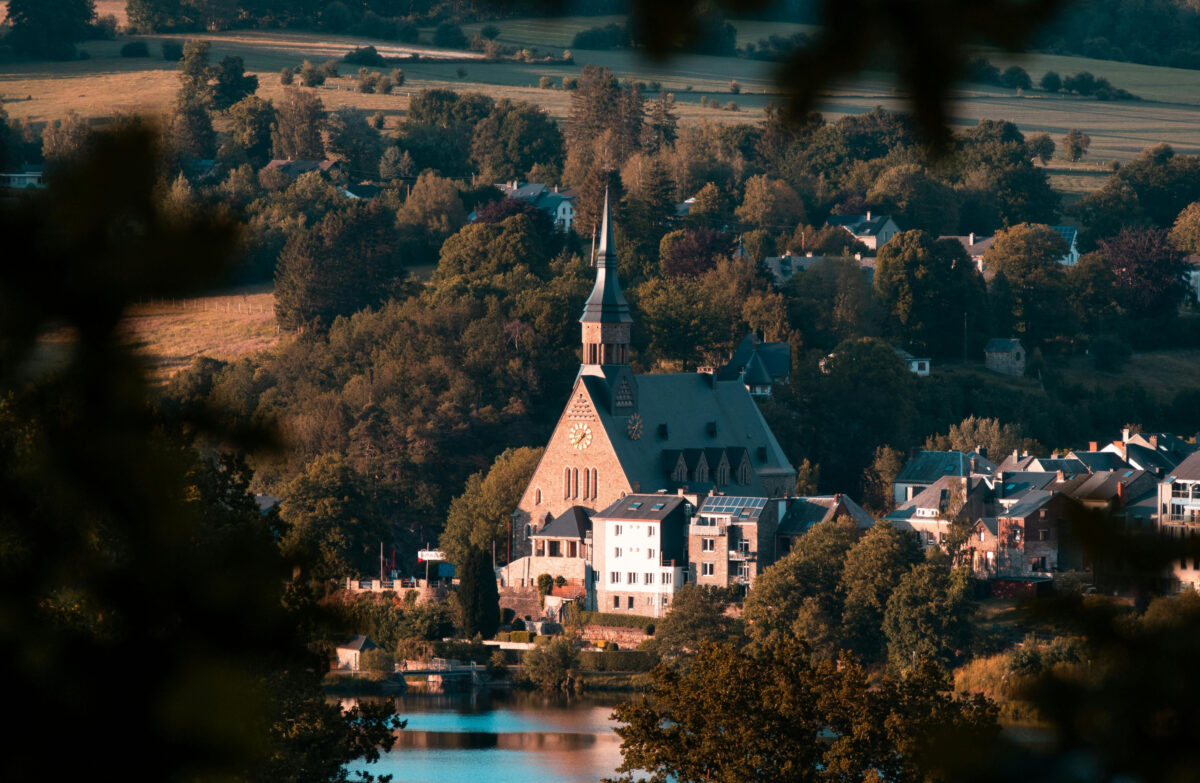
La Feuillerie in Celles (Tournai): a Jardin Remarquable in the heart of Wallonia

Some places have a special soul. They endure through seasons and years, preserving their natural beauty intact. This is the case for La Feuillerie, in Celles, an exceptional property that Christie’s International Real Estate has the honor of presenting for sale. This rare estate has received the prestigious Jardin Remarquable label awarded by the non-profit organization Parcs et Gardens de Wallonie. But what exactly does this recognition mean?

What is a Jardin Remarquable?

In Wallonia, this label distinguishes exceptional gardens for:

  • Their landscape composition.
  • The richness of their plants.
  • Their quality of maintenance with respect for biodiversity.
  • Their heritage and historical interest.

It is a true mark of excellence that rewards places where nature is sublimated, and where every detail is designed to offer visitors a unique experience.

La Feuillerie: a collector’s garden

Created and shaped over the years by passionate enthusiasts, La Feuillerie is now recognized as one of the most beautiful private gardens in Wallonia.

This romantic park, nestled in the heart of the charming village of Celles, is famous for its rare species, remarkable trees, and captivating plant atmospheres. It also hosts, each year, the unmissable Plant Festivals, attracting international amateurs and collectors.

A natural art of living

Acquiring La Feuillerie is much more than buying real estate. It means entering a living place protected and recognized for its botanical and cultural importance. It also means perpetuating craftsmanship, a love of gardens, and respect for nature that make it a unique heritage.

A rare property presented by Christie’s International Real Estate Belgium

At Christie’s, we are committed to valorizing properties that tell a story, where the art of living is fully expressed. La Feuillerie is the perfect illustration: a timeless green haven, where each visit is an enchanted interlude.

Find out more about this property with a Jardin Remarquable on our website via this link.

The Sander Pierron house: an Art Nouveau gem in Ixelles

Nestled in the heart of Ixelles, at 157 rue de l’Aqueduc, the Sander Pierron house is a unique creation by Victor Horta, one of the greatest architects of Art Nouveau. Designed in 1903, this bourgeois house bears witness to a period when Horta was moving towards a more refined style, due to the budgetary constraints imposed by his client. Now listed as a heritage site by the Brussels-Capital Region since 1998, this emblematic residence is being put on the market by Christie’s International Real Estate Belgium, offering architecture lovers a rare opportunity to acquire an exceptional property.

Sander Pierron: writer, art critic and architecture enthusiast

Sander Pierron (1872-1945) was not only an influential writer and journalist of his time, he was also a fervent admirer of emerging artistic movements, including Art Nouveau. From a modest background, he began his career as a typographer before establishing himself as an art critic. A friend of literary figures such as Georges Eekhoud and Émile Verhaeren, Pierron played an important role in disseminating new artistic trends in Belgium. His close relationship with Victor Horta was evident not only in his admiration for the architect’s work, but also in the commission he received for the house that was to become his intellectual refuge.

Innovative, uncluttered architecture

Unlike Victor Horta’s most flamboyant creations, the Sander Pierron house reflects a more sober approach, dictated by limited financial resources. Yet this sobriety in no way detracts from the architectural richness of the building. The façade, composed of polychrome red and white bricks – a first for Horta – is punctuated by touches of blue stone that structure the base and frame the entrance door.

A balcony on the top floor, with its typically Art Nouveau lines, highlights the importance of Sander Pierron’s office, where he wrote from this light-filled space. Remarkably fine ironwork adorns the door and elements of the façade, illustrating Horta’s attention to detail.

A preserved and refined interior

The interior layout follows a classic pattern, with a kitchen in the basement, a living room facing the street and a dining room facing the garden. However, the richness of the interior decoration is a direct testimony to Horta’s expertise. The entrance hall is adorned with refined mosaics and leads to two staircases: a main wooden staircase with an ornate banister, and a second white marble staircase leading to the basement.

The first floor houses the library, a space designed with flowing pitch-pine elements, embellished with yellow ochre stained glass doors that delicately filter the light. The meticulously crafted door handles are reminiscent of the plant-like curves so dear to Art Nouveau.

A unique opportunity on the property market

Buying the Sander Pierron house is much more than buying a property: it’s becoming the owner of a piece of Brussels history, designed by one of the greatest masters of Art Nouveau. This residence, preserved in its original state, represents an exceptional opportunity for any lover of architecture and heritage.

Christie’s International Real Estate Belgium is proud to offer this unique property for sale. For further information or to arrange a viewing, please do not hesitate to contact our team.

Find out more about this Art Nouveau house on our website via this link.

Prestigious residences in Brussels: understanding the differences between hôtel particulier, hôtel de maître and maison de maître

Brussels is a city rich in architectural heritage, with many historic residences that have stood the test of time. Among these, three types of residence stand out in the high-end property market: the hôtel particulier, the hôtel de maître and the maison de maître. Although these terms are often used interchangeably, they refer to very different types of properties. This article sheds light on these differences and their impact on the Brussels property market.

Hôtel particulier

A hôtel particulier is a luxurious urban residence designed for a single wealthy family. These residences are distinguished by their elegant architecture and generous size. Often located in prestigious areas of Brussels, they reflect the high social status of their owners. In 1847, for example, there were 115 hôtels particuliers in the Quartier Léopold, 42 of which had carriage entrances, illustrating the importance of these residences in the urban landscape of the time.

Hôtel de maître

The term ‘hôtel de maître’ is commonly used in Brussels to describe large-scale bourgeois houses, generally built between the end of the XIXᵉ and the beginning of the XXᵉ century. These residences are characterised by a well-groomed façade, a notable cornice height and features such as a carriage driveway. For example, the Winssinger Hotel, designed by Victor Horta in 1894, illustrates this typology with its distinctive architecture and harmonious integration of metal structures.

Maison de maître

The ‘maison de maître’ in Brussels is an urban bourgeois residence, generally built between 1850 and the first decades of the XXᵉ century. These houses feature a symmetrical façade, generous ceiling heights and decorative elements such as mouldings and marble fireplaces. They are often lined up in a row along Brussels streets, contributing to the architectural character of the city. For example, the residential block bounded by Rue Belliard, Rue de l’Industrie, Rue Montoyer and Rue de la Science features a succession of maisons de maître and hôtels particuliers, illustrating the coexistence of these typologies in the urban fabric of Brussels.

Key differences in Brussels

  • Location: The hôtels particuliers and hôtels de maître are generally located in the prestigious areas of Brussels, while maisons de maître are found in a variety of neighbourhoods, reflecting the urban expansion of the city in the late XIXᵉ century.
  • Architecture: The hôtels particuliers are distinguished by their elaborate architecture and grandeur, often with private gardens. The hôtels de maître have a well-groomed façade, a high cornice and features such as a carriage entrance. The maisons de maître, although large, have a more sober and functional architecture, adapted to bourgeois urban life.

Conclusion

These three types of residence reflect the architectural and social history of Brussels, each having helped to shape the city’s urban landscape. Preserving and value them is essential to maintaining the Belgian capital’s rich building heritage.

Emile Fabry’s studio: a jewel of Belgian symbolism for sale

An artist’s studio is much more than a simple workspace: it is a sanctuary, a time capsule where works of art are born and artistic trends are shaped. Today, Christie’s International Real Estate Belgium has the honour of selling an exceptional property: the studio home of Belgian symbolist painter Emile Fabry (1865-1966). This place, steeped in history and inspiration, offers a unique opportunity to acquire a heritage at the crossroads of architecture and the plastic arts.

A workshop designed for creation

Built in 1902 by architect Émile Lambot, Émile Fabry’s studio house is in an eclectic style with touches of Art Nouveau, an aesthetic choice in line with the artist’s Symbolist aspirations. Located in Brussels, this house was much more than just a place to live: it was home to Fabry’s creative genius, and later to that of his daughter Suzanne Fabry (1904-1985) and her husband Edmond Delescluze (1905-1993), themselves painters and set designers for the Opéra de la Monnaie.

The upper floor of the house was designed as an ideal working space, bathed in natural light and offering an atmosphere conducive to the development of the great compositions that marked Fabry’s work. It was here that the artist produced some of his major works, characterised by a powerful idealism and an inspiration drawn from mythology, spirituality and human greatness.

A testimony to Belgian symbolism

A key figure in Belgian Symbolism, Émile Fabry followed in the footsteps of the great artists of his time, such as Fernand Khnopff and Jean Delville. His work, marked by a quest for the absolute and a search for the sublime, is expressed in works with idealised figures, bathed in an unreal light and pervaded by a sense of mystery.

The studio house was the setting for this demanding artistic approach, where each canvas took shape in a quest for formal perfection and profound meaning. But Fabry’s legacy did not end there: his studio also became that of his daughter Suzanne and his son-in-law Edmond Delescluze, whose talent was expressed in the creation of sets and costumes for the Opéra de la Monnaie.

A preserved memory, a place to rediscover

Over the decades, the collection of the studio house has been largely dispersed, notably through sales and acquisitions by institutions such as the King Baudouin Foundation, but the building itself remains a testimony to the artistic effervescence that reigned there for almost a century. Aware of this rich heritage, the Brussels Region commissioned a detailed inventory of the works and documents housed there until 2017.

Today, this historic house, stripped of its collections but still imbued with the aura of its illustrious occupants, represents an exceptional opportunity for any lover of art and architecture. Within its walls, the memory of a time when painting was meant to convey meaning, when the quest for beauty transcended the material, and when every brushstroke was an invitation to dream.

A unique acquisition for an enthusiast

Putting Émile Fabry’s studio up for sale means offering a future owner the chance to live in a space where the history of Belgian art was written. This rare property is a gem for lovers of architecture and heritage, offering the ideal setting for a collector, an artist in search of inspiration, or simply a lover of places steeped in history.

Christie’s International Real Estate Belgium is at your disposal for any further information you may require on this extraordinary house. A unique opportunity to write your own chapter in the history of a place inhabited by creativity and artistic excellence.

Find out more about this studio house on our website via this link.

Dual registration of rental agreements in Brussels in 2025: what lessors need to know

From 1 January 2025, landlords in the Brussels Region will have to comply with a new administrative requirement: registering their lease contracts on a dedicated regional platform, Irisrent. This requirement comes in addition to the traditional federal registration on MyRent, raising questions about lease management and the possible implications for landlords and tenants. Here’s a look at the new rules and the issues they raise.

A new regional platform for rental agreements

In order to increase transparency in the rental market, the Brussels-Capital Region is setting up a database that will make it possible to record lease contracts in greater detail. This platform, which will be operational via IRISbox, aims to collect essential information on rented accommodation:

  • Identity of the lessor and lessee
  • Characteristics of the property (address, type, surface area, number of bedrooms, PEB, meters, etc.)
  • Details of the contract (amount of rent, service charges, term of the lease, indexation, etc.)

The stated aim of the Brussels authorities is to obtain more accurate data in order to improve the indicative rent scale and provide a better framework for changes in the rental market.

A federal obligation that is still in force

Until now, the registration of lease contracts was the responsibility of the FPS Finance via MyRent, the federal portal. However, the Brussels Region has announced its intention to replace this obligation with its own registration system. However, this decision has been challenged by the federal government, which points out that responsibility in this area remains at national level.

To date, the federal registration requirement has not been officially abolished. An appeal has been lodged with the Constitutional Court, and pending a decision, landlords will have to register their leases on MyRent AND on Irisrent.

What are the consequences for homeowners?

In practice, this double declaration entails additional administrative formalities for Brussels lessors. Failure to comply with this obligation may result in various penalties:

  • At federal level: a fine of €50 for failure to register on MyRent.
  • At regional level: contractual restrictions, such as the impossibility of indexing the rent or imposing compensation in the event of the tenant leaving early.

Lessors associations such as the SNPC are therefore recommending that lessors continue to register their rental agreements on both platforms until the legal situation has been clarified.

Conclusion

The introduction of dual registration of rental agreements in Brussels in 2025 represents a significant change in rental management. While this measure aims to provide greater transparency in the rental market, it also creates administrative complexity for lessors. In the absence of a clear agreement between the different levels of government, it is essential for lessors to comply with both obligations in order to avoid possible sanctions.

Tenant’s right of first refusal: new legislation in the Brussels-Capital Region

A new legislative provision specific to the Brussels-Capital Region came into effect on January 6, 2024. It establishes a right of first refusal for certain tenants when selling a property located in Brussels’ 19 municipalities. This measure, incorporated into the Brussels Housing Code, deserves careful attention from property owners.

Understanding the scope of Brussels regulations

This right applies to tenants who are domiciled in a property within the Brussels Region and hold a 9-year primary residence lease. It allows them, along with certain family members also domiciled in the property, to have priority in purchasing the property.

Certain transactions remain exempt, including sales between family members up to the third degree of kinship, and transfers of undivided rights.

Essential steps for Brussels property owners

The procedure requires formal notification to the tenant by registered mail, detailing the sale conditions. The tenant then has 30 days to exercise their right. Without a response, the owner may proceed with a traditional sale.

An important note: if a third-party purchase offer is lower than the price initially proposed, the tenant must be consulted again, this time with a 7-day response period.

Professional Guidance in Brussels

Real estate agents and notaries are now required to ensure compliance with this procedure within Brussels territory. Our team, based on Avenue Louise and specialized in the Brussels market, guides property owners through this process to ensure smooth transactions that comply with the new provisions.

This evolution in Brussels legislation underscores the importance of expert advice in realizing your property project in the capital. Our advisors are at your disposal to guide you and answer your questions.

Real estate reform: registration duties in Wallonia reduced to 3%

The Walloon real estate market is set to undergo a significant transformation with the introduction of a historic tax reform.
The Walloon Parliament has just approved a measure that will substantially reduce registration duties from 12.5% to 3% starting January 1, 2025.

New system to facilitate home ownership

This reform primarily aims to make home ownership more accessible, particularly for young buyers.
Indeed, the average age for purchasing a first property has increased from under 25 to over 35 years in recent years.

Eligibility conditions

The reduced rate of 3% will apply exclusively to the purchase of a primary and only residence.
Current homeowners can also benefit from this rate, provided they sell their existing property within three years of the new acquisition.

Impact on the real estate market

This reform is expected to significantly stimulate the Walloon real estate market.
Real estate experts anticipate an increase in demand, with the number of authentic deeds potentially rising from 125 to 200 per day by early 2025.

Elimination of existing measures

In exchange for this reduction, several existing schemes will be abolished.

  • The tax allowance for first-time buyers.
  • The housing bonus.
  • The reduced rate for modest housing.

Practical aspects for buyers

Future buyers can already begin their purchase process.
The signing date of the authentic deed, not the preliminary agreement, will determine the application of the new rate.
It is recommended to allow approximately four months between signing the preliminary agreement and the authentic deed.

Future prospects

This reform, representing a 700 million euros investment for the Walloon Region, demonstrates a strong political commitment to facilitating home ownership.
It could also influence real estate dynamics in neighboring regions, particularly in Brussels where registration duties remain at 12.5%.

This historic measure marks a turning point in Wallonia’s housing policy, offering new perspectives for future homeowners while reshaping the region’s real estate tax landscape.