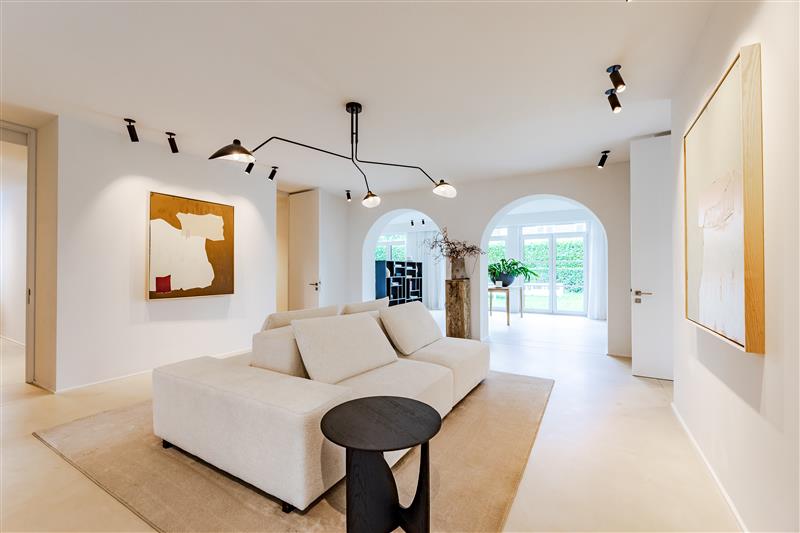
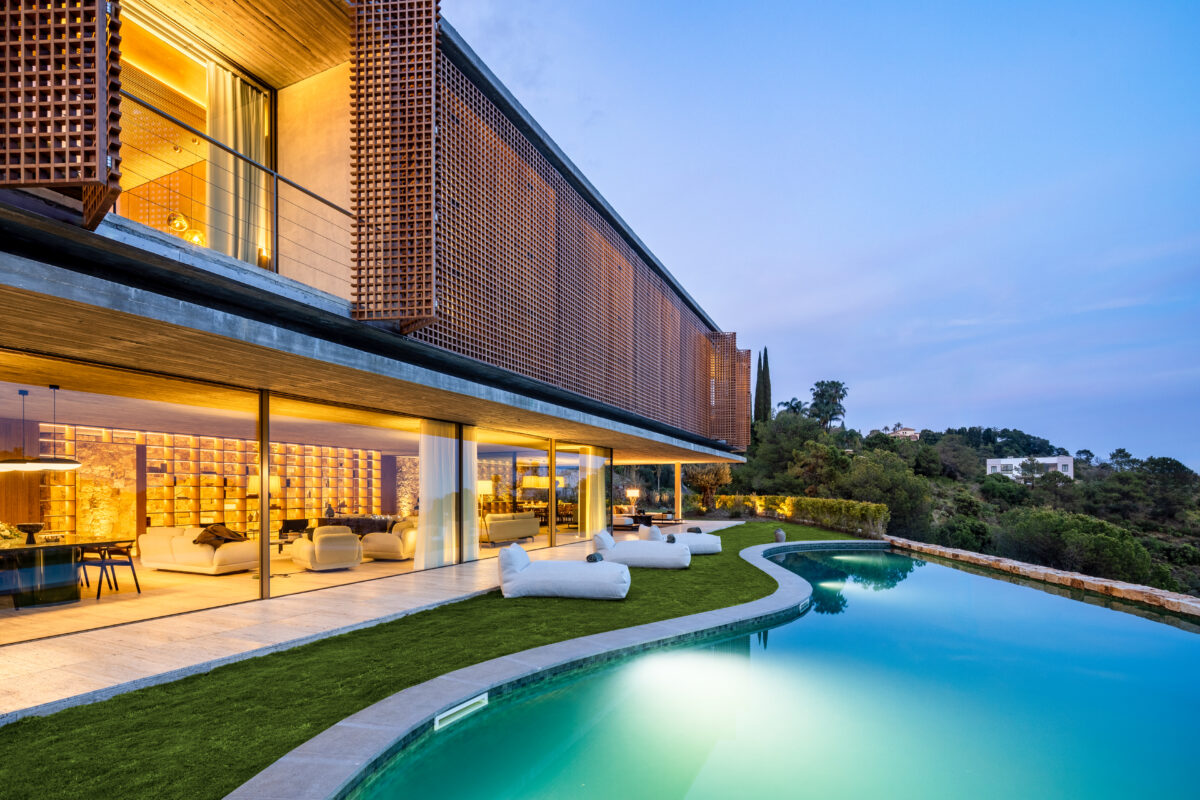
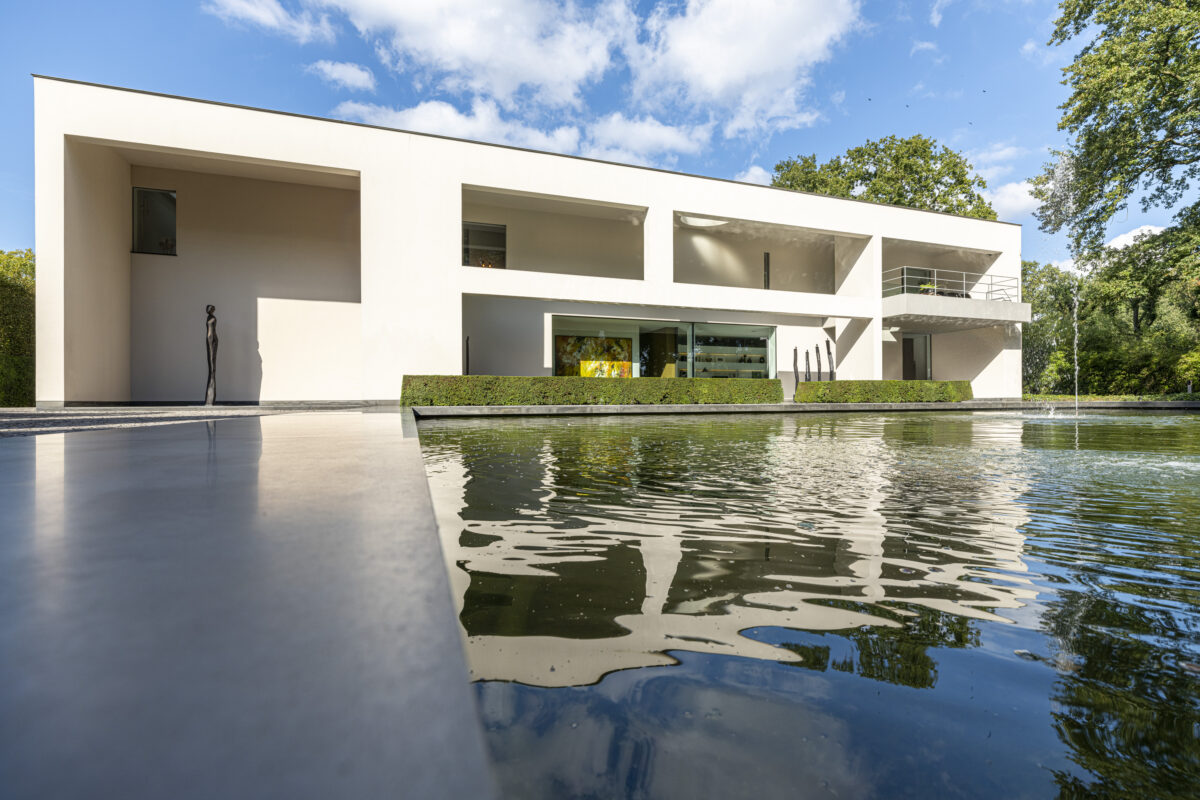
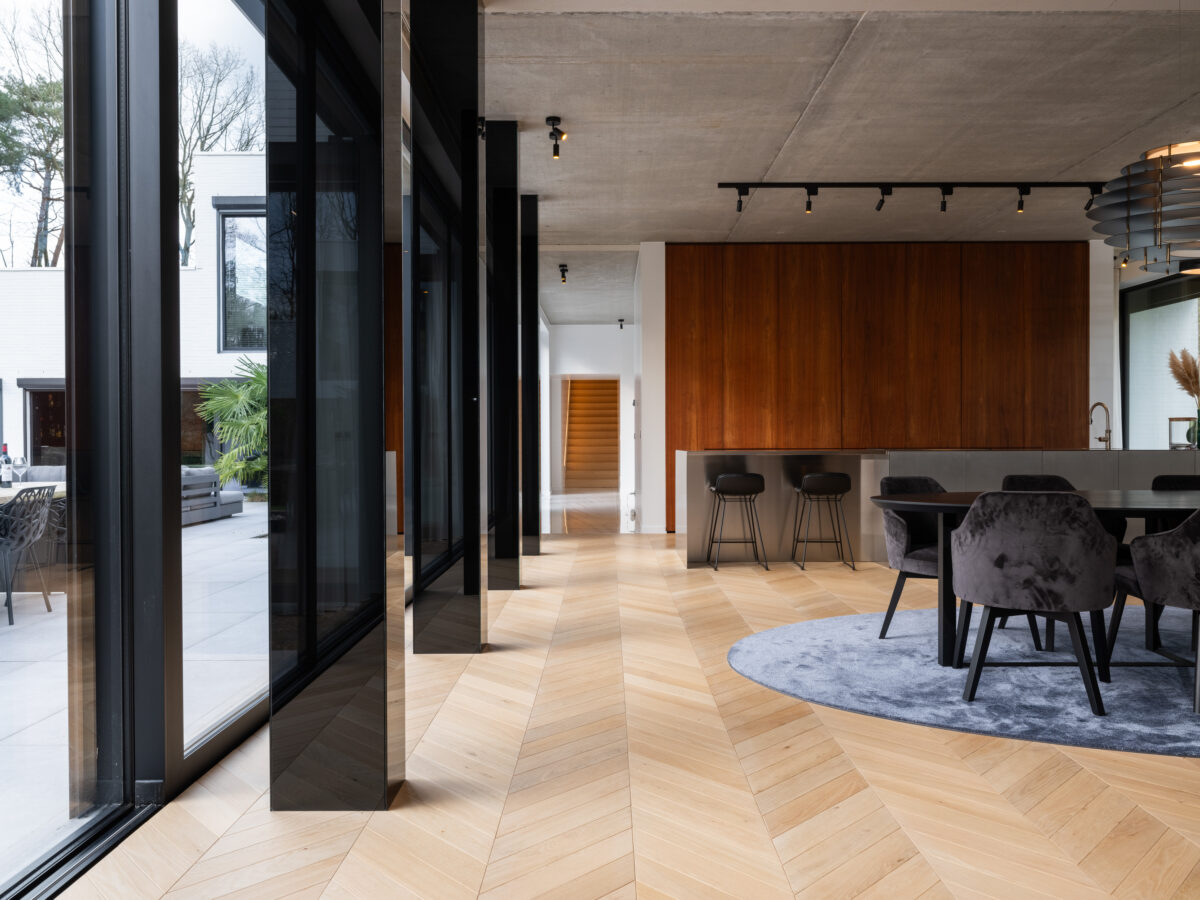
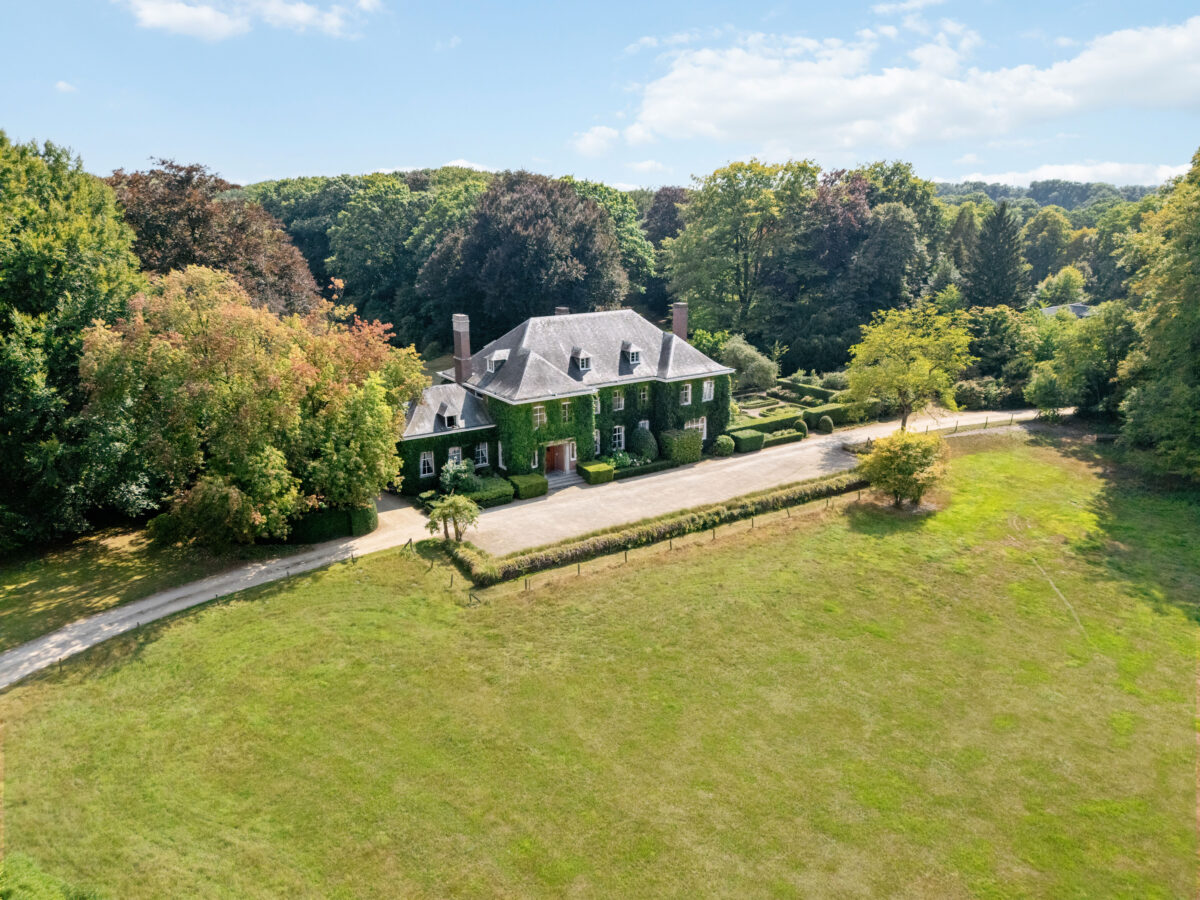
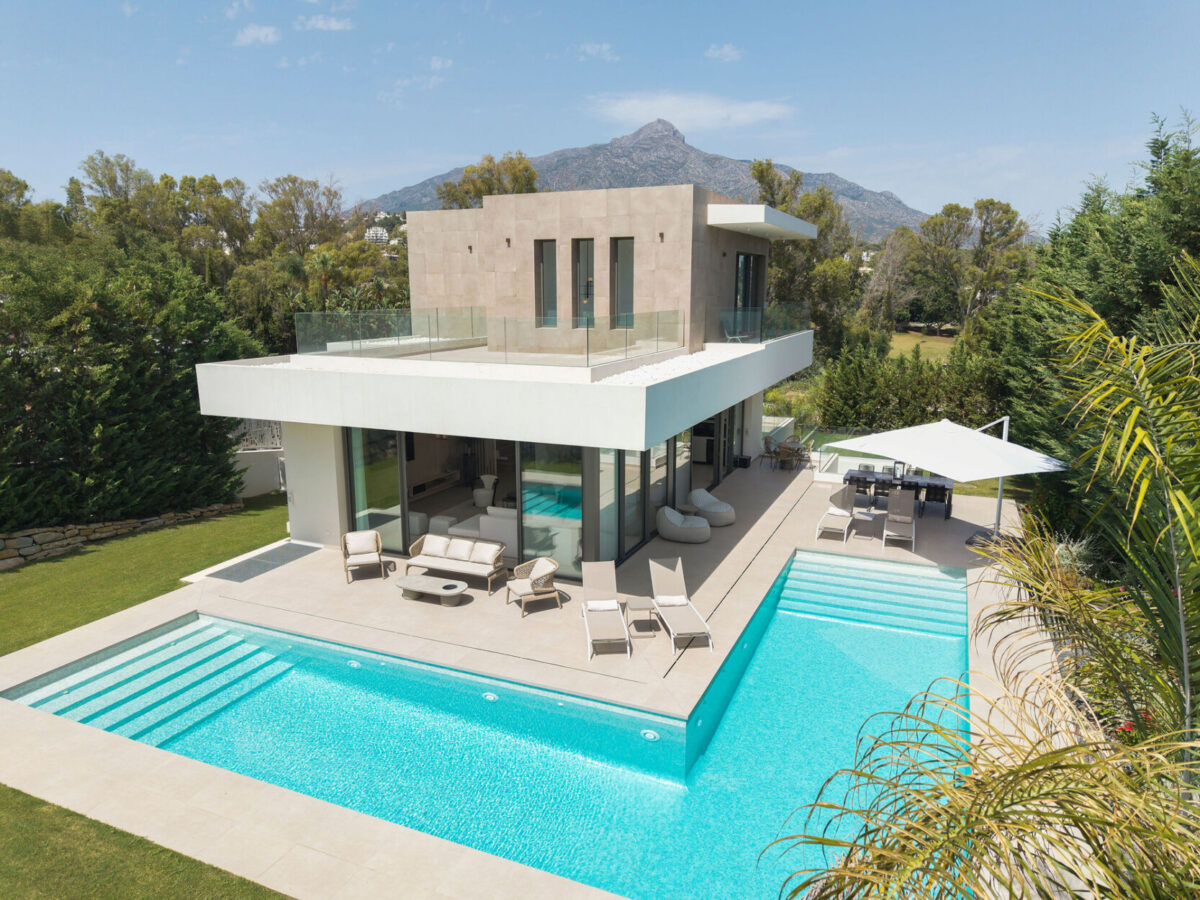
Lighting architecture in luxury homes

Architectural lighting in luxury homes

In a luxury home, light shapes far more than just what you see. It sets the mood, emphasizes architectural lines, and makes materials, art and sight lines perceptible. Anyone assessing exclusive real estate therefore looks not only at floor area and finish, but also at how lighting lifts the living experience to a higher level.

Why architectural lighting is so decisive in the high-end segment

In exclusive real estate, every element must contribute to the home’s overall experience. Lighting plays a key role because it works both functionally and emotionally. By day it supports the relationship with daylight, views and a sense of space. Once it’s dark, artificial light takes over and determines how a home feels.

In luxury homes, architectural lighting is rarely accidental. It supports, among other things:

  • Architecture – by making volumes, ceiling heights, niches, staircases and sight lines legible
  • Materials – by allowing stone, wood, metal, texture and bespoke finishes to come into their own
  • Ambience – from intimate and warm to bright and representative
  • Use – so that living, entertaining, relaxing and working each get an appropriate light level
  • Exclusivity – because refined lighting makes the home feel more coherent, richer and more carefully designed

This is precisely why lighting in high-end homes is best not seen as a finishing touch, but as an integral part of the design and the living experience. Especially in new construction it is valuable to integrate the lighting plan early in the design phase.

How good lighting strengthens a home’s architecture

A strong lighting concept doesn’t make architecture louder, but clearer. It guides the eye, places accents where needed and leaves calm where that works better. In luxury real estate this is essential, because value often lies in proportion, material choices and detailing.

For example, indirect light can make a ceiling feel higher, while focused accents create depth and focus. Vertical illumination on walls generally gives a space more grandeur than light solely from above. Subtle integration in niches, staircases or bespoke joinery ensures the technology remains subordinate to the design.

Outdoors this matters as well. A refined facade, a driveway, a garden structure or a terrace gains expression when light not only illuminates but composes. In practice it often comes down to balance and layering, so the evening experience gains depth and atmosphere without becoming too harsh or intrusive.

The key characteristics of architectural lighting in luxury homes

Although every home is unique, a few principles recur frequently in the high-end segment. They help you read a property’s quality more clearly.

Layered light instead of a single uniform solution

A luxury home rarely relies on just one type of lighting per room. Quality usually emerges from an interplay of ambient light, accent lighting and mood lighting. This allows the same space to adapt to different times of day and different ways of living.

Attention to sight lines and experience

In high-end architecture, what you see from an entrance, living area or hallway is often deliberately composed. Lighting supports that composition by drawing attention to art, bespoke elements, vistas or characterful materials.

Discreet integration

In a refined interior, lighting ideally stands out by its effect, not by visual noise. Recessed lines, concealed light sources and carefully chosen fixtures bring calm and elegance.

Tuned to day and night

By day, artificial light should not disrupt the natural rhythm. In the evening it should bring warmth, comfort and depth. Good architectural lighting considers both situations.

Technology that supports comfort

In some luxury homes, an advanced home automation system increases ease of use, for example by centralising control or activating scenes. When done well, technology enhances the quality of living without disturbing the interior’s serenity. Combine this with energy-efficient luminaires and high-quality LEDs, in line with the EPC and energy requirements 2026, and you pair comfort with lower consumption profiles.

What to look for when evaluating a luxury home

For buyers and sellers in the high-end segment, lighting is not just an aesthetic detail. It also influences how convincing a home feels during a visit, presentation or viewing.

  • Does the home feel equally strong in the evening? Some properties impress in daylight but lose character as soon as artificial light takes over.
  • Are the architectural assets truly supported? Think of a double-height space, staircase, bespoke joinery, fireplace feature, facade elements or long sight lines.
  • Is there a balance between ambience and functionality? Exclusive living calls for comfort, but also usability in the kitchen, bathroom, dressing, study or circulation areas.
  • Does the lighting match the level of the home? High-end finishes call for the same refinement in lighting experience and control.
  • Is there cohesion between indoors and outdoors? In premium real estate, outdoor lighting also contributes to appearance, safety and the evening experience.

This is relevant for owners because lighting strongly influences the presentation of a home. For prospective buyers it helps distinguish why one property convinces immediately and another resonates less, especially within a turnkey concept for high-end homes where design and execution are closely aligned.

Lighting, home automation and modern luxury

In contemporary luxury homes, comfort and discretion often go hand in hand. Lighting increasingly forms part of a broader whole in which control is intuitive and the home adapts to the moment. Think of indirect lighting, mood scenes or lighting controlled via a central system. Evolutions such as smart lighting and circadian lighting are gaining importance; see also the Luxury real estate trends 2026.

Why this also matters for property value and presentation

In the luxury segment, a home is not chosen purely rationally. Emotion, atmosphere and refinement play a major role in the perception of value. Architectural lighting influences precisely those factors and contributes to value creation through experience.

A home with a strong lighting experience usually appears more considered, more inviting and architecturally stronger. That makes it not only more pleasant to live in, but also more compelling to present to a discreet and demanding audience. Especially in a market where international buyers often judge quality, finish and overall impression quickly, lighting can make the difference between mere interest and true appeal. Inspiration from case studies on prestigious residences in Brussels shows how architecture, appearance and the living experience reinforce one another.

FAQ

How much does a lighting plan for a house cost?

That depends heavily on the size of the home, the complexity of the design and the desired integration. In luxury homes, lighting is often considered part of the overall living quality, so custom work and coordination play a larger role than in standard projects.

How can I simulate daylight in my home?

Artificial light can be tuned to partially approximate daylight patterns, for example by varying intensity and colour temperature throughout the day (cooler and brighter during the day, warmer in the evening). Important factors include distribution, direction, intensity and the relationship with materials and sight lines in the home.

What makes a home luxury?

Luxury rarely lies in a single element. It is usually a combination of location, architecture, spatial experience, level of finish, privacy, comfort and coherence in the design. Architectural lighting reinforces that overall impression and makes quality visible at the right moments, as shown by examples of architectural perfection and inspiring living stories.

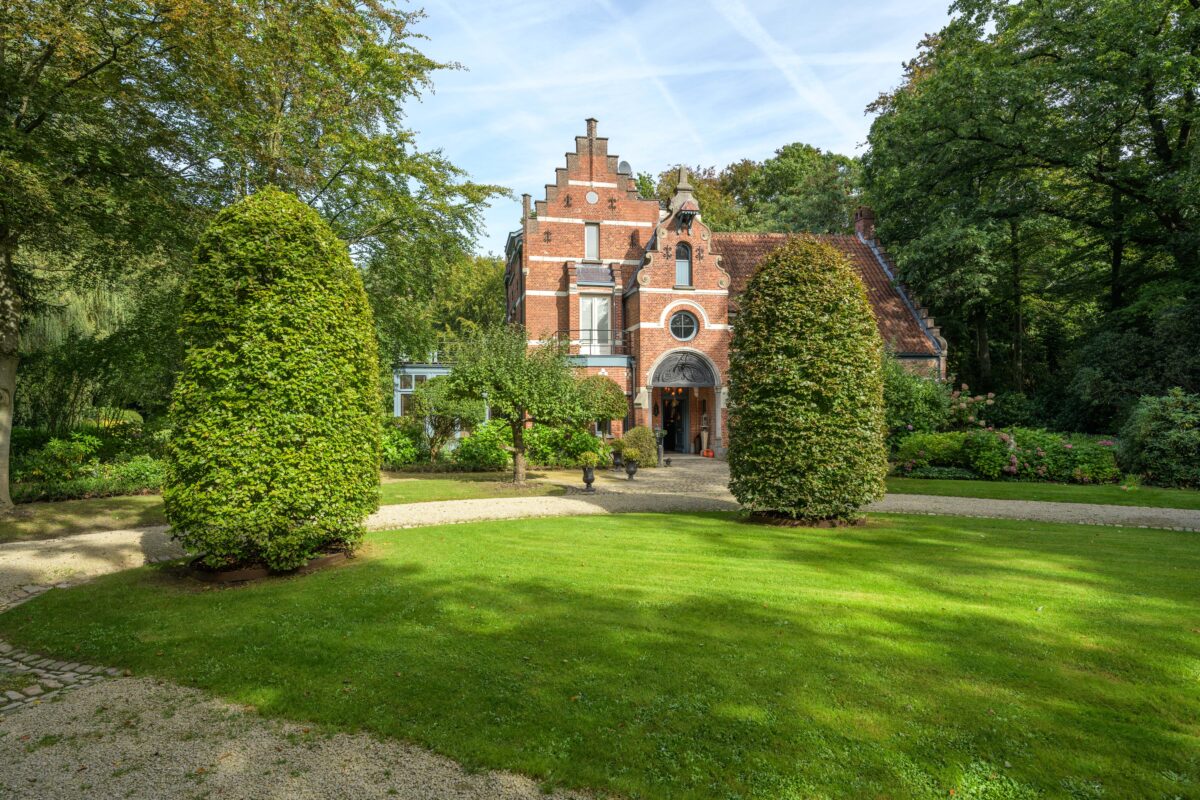
Due diligence and certificates for buying luxury real estate in Belgium

When purchasing luxury real estate in Belgium, thorough due diligence is not a formality but an essential part of a safe and well-considered transaction. In addition to the mandatory certificates, it is wise in the higher segment to carry out additional checks as well, especially for character homes, architectural properties, villas with extensive technical systems, or exclusive apartments. This gives you a clear view in advance of the property's legal, technical, and administrative condition.

Why due diligence is especially important for luxury real estate

A complete file not only helps to assess risks more accurately, but also to negotiate from a stronger position and avoid delays on the way to the preliminary sale agreement and the notarial deed. While a standard file may suffice for an average home, luxury real estate more often requires extra vigilance. Unpermitted extensions, outdated technical installations, unclear co-ownership or missing documentation can, in this segment, have a greater impact on value, permitted uses and future investments. Within the broader legislation on luxury real estate in Belgium, it is therefore important to scrutinize every component of the file.

Which mandatory certificates and documents you should at least verify

The exact composition of the file depends on the type of property, the location and the region. In any case, check at least the following items:

  • EPC or PEB – legally required upon sale: EPC in Flanders, PEB in Wallonia and Brussels, providing insight into the property’s energy performance.
  • Electrical inspection – to know the conformity of the installation or any non-compliances.
  • Soil certificate – especially to verify whether there are known soil risks.
  • Urban planning information – crucial to verify permits, zoning/designation and possible infringements.
  • Flood information – relevant for the location and future risk; in Flanders, among others, P-score/G-score.
  • Asbestos certificate – when legally required (in Flanders, generally for buildings from before 2001 that are sold).
  • Heating oil tank certificate – when the property has a heating oil tank.
  • Post-intervention file (PID) – when legally applicable for works after May 2001 carried out by multiple contractors.
  • Cadastral and ownership data – to confirm boundaries, parcel information and ownership status.

For more detail on specific certificate obligations such as the soil certificate and flood report, it is worthwhile to delve further into the documentation requirements for each file.

EPC en energieprestatie - wat betekent het voor uw aankoop

The EPC/PEB certificate provides an objective assessment of energy performance, but for luxury homes look beyond the score alone. Pay attention to insulation of large glazing, performance of HVAC, condition and efficiency of heat pumps, inspection and yield of solar panels, and the efficiency of pool or wellness installations. Looking ahead pays off: include future energy requirements in your risk analysis. Read more in EPC and 2026 energy requirements for luxury homes. In apartment buildings, also ask about the central boiler plant, maintenance, and the allocation of consumption costs.

Additional checks that are often advisable for luxury real estate

For high-end property, a purely administrative check rarely suffices. Depending on the property, additional inspections may be advisable to avoid unpleasant surprises after purchase.

Technical condition of the building

For character homes, renovated villas or architectural properties, it makes sense to give extra attention to the roof, facades, moisture issues, foundation, exterior joinery and visible wear. Even with a pristine presentation, underlying maintenance or renovation costs can be significant.

Technical installations and comfort systems

Luxury real estate often includes home automation, alarm systems, climate control, elevators, wellness installations, heated outdoor amenities or pool systems. Determine what is present, what is included in the sale, and the condition of these installations.

Permitted extensions and outbuildings

Pool houses, guest houses, carports, garden structures, verandas or later extensions increase the appeal, but they must also comply with planning rules. What is visible must correspond to the permits and the official file information.

Easements, access and privacy

Look at easements, access rights, passages, plot boundaries and other legal elements that may affect use.

Specific point of attention for luxury apartments: VME documents

In addition to the private part, the documents of the association of co-owners (VME) are crucial.

  • Minutes of the general meeting – to detect planned works, discussions or disputes.
  • Reserve fund and working capital – to assess the financial health of the building.
  • Ongoing or planned renovations – e.g. to the facade, roof, elevators or shared technical systems.
  • Co-ownership regulations and statutes – to understand use restrictions and rights.

When in the purchase process should you check these certificates?

Review the file as early as possible. If you have serious interest, request the available certificates and documents and have them assessed. This allows you to discuss ambiguities in good time, request additional information, or correctly formulate conditions before signing the preliminary sale agreement. Waiting until the notarial phase increases the risk of delay or renegotiation. In that phase you will often also look at the tax impact, such as the registration duties in Wallonia. Also estimate the deed costs straight away via notary costs when purchasing luxury real estate (2026).

How due diligence helps you make a better decision

A thoroughly reviewed file provides insight into the actual condition, legal and technical points of attention, and possible investments after purchase. That is relevant for risk management, price assessment, negotiation and future use.

Guidance for a well-prepared purchase trajectory

An experienced real estate partner helps you understand the file, flag points of attention and structure the timing towards the preliminary sale agreement and the deed. Christie’s International Real Estate Belgium supports buyers and advises on the assessment of characterful and distinctive property features, so that you decide from a better-informed position.

Frequently asked questions

Are certificates sufficient to purchase luxury real estate safely?

No. Mandatory certificates are an important starting point, but for luxury real estate additional checks are often advisable, such as the technical condition of installations, permitted extensions, VME documents for apartments, and alignment between the file and the actual situation.

Which documents are especially important for a luxury apartment?

Almost always the VME documents: minutes, information about the reserve fund and working capital, planned works, and the co-ownership regulations.

When is the best time to request these documents?

As early as possible in the process. If you have serious interest, have the documents collected and assessed in order to detect ambiguities sooner and avoid delays at the preliminary agreement or deed.

Is due diligence for a villa different from that for a standard house?

Often yes. Villas and exclusive properties usually have more technical systems, outbuildings, extensions and specific plot characteristics. As a result, the investigation is broader and you look beyond only the legally required certificates. For rented properties in Brussels, the tenants’ right of first refusal may also be relevant.

Luxury real estate valuation and asking price

Setting the right asking price for luxury real estate takes more than a rough estimate or a standard comparison with nearby homes. In the high-end segment, scarcity, discretion, quality of finish, location, and international demand carry much more weight. A substantiated valuation helps you position your property correctly and sharpen the sales strategy from the outset.

Waarderingsmethodes en vraagprijsstrategie


Een geloofwaardige vraagprijs start met een triangulatie van meerdere waarderingsmethodes. Elke methode heeft een toepassingsgebied en een aandachtspunt:

MethodeWanneer toepassenAandachtspunt
VergelijkingsmethodeVilla’s en penthouses met recente, vergelijkbare verkopen in de buurtCorrecties voor zicht, perceel, afwerking en off-market premies
KostenbenaderingNieuwbouw of grondige renovaties met hoge afwerkingsgraadReconstructiekost, vetusteit en onzichtbare kwaliteit juist waarderen
InkomensbenaderingStedelijke top-appartementen of short-stay assets met verhuurpotentieelRealistische huur, bezettingsgraad en risico-opslag in de yield
Residuele methodePerceel of eigendom met ontwikkelpotentieel en duidelijke bouwrechtenZorgvuldige aannames over programma, timing, kosten en exitprijs


Vertaal de waardebandbreedte vervolgens naar een vraagprijsstrategie. Bepaal een duidelijke positionering, kies bewust voor publiek of discreet aanbod, en rond slim af rond psychologische drempels zonder de exclusiviteit te ondermijnen. Werk met prijsbanden die aansluiten op het zoekgedrag van kopers, behoud beperkte onderhandelingsruimte en zorg dat timing, presentatie en marketing naadloos aansluiten op de prijsspanning die u beoogt.

Which factors most strongly influence the value of luxury real estate

The market value and the final asking price of an exclusive property are determined by a combination of objective and positioning factors. Not every element has the same impact, but together they determine how your property differentiates itself in the market.

  • Location and micro-location – not only the municipality or neighborhood matters, but also tranquility, privacy, accessibility, views, and the exact position within the surroundings.
  • Scarcity – the rarer the property type or location, the less useful standard comparisons become and the more the price can be supported by exclusivity.
  • Architecture and appeal – signature, proportions, natural light, and design coherence significantly influence the perception of value.
  • Level of finish – high-quality materials and a consistent, timeless finish have more impact in the luxury segment than in conventional residential real estate.
  • Layout and quality of living – generous volumes, logical circulation, comfort, and functionality remain essential, even in prestigious properties.
  • Outdoor spaces and plot – garden design, orientation, terraces, and the relationship between building and land often contribute to premium positioning.
  • Technical and energy characteristics – even in the high-end segment, contemporary comfort and energy performance influence market reception. The recently tightened requirements towards 2026 have a direct impact on valuation; see EPC and energy requirements 2026: impact on the luxury segment.
  • Buyer audience – for luxury property, interest can arise not only locally but also nationally and internationally, which also steers pricing.

In addition, mandatory certificates and risk reports can influence valuation and price adjustments, such as the soil certificate and flood report when selling.

Why market knowledge and timing help set the price

The value of luxury real estate is never completely separate from the market environment. Availability of comparable properties, the impact of interest rates on luxury real estate, international interest, and local scarcity can all help determine how much support there is for a given pricing. In markets with very limited supply, timing can indeed influence the sale price. Unsure about the right timing? Read Is it a good time to sell (2026)?

That is why an up-to-date reading of the market is essential. A substantiated asking price rests not only on the property itself, but also on how buyers behave today, what alternatives they have, and how strongly the market reacts to similar cases. Within a sales process, a targeted market analysis, supplemented with real-time market information, can help sharpen that assessment. The recent Luxury real estate trends Belgium 2026 also offer useful context.

Why a standard estimate is not enough for luxury real estate

In exclusive real estate, every property is unique to some extent. A villa, penthouse, or townhouse in the top segment is rarely correctly assessed based solely on average price per square metre or automated models. Such systems can provide an initial indication but often fail to account sufficiently for the elements that make the difference in luxury real estate.

Think of an exceptional micro-location, sightlines, plot quality, architecture, choice of materials, privacy, wellness facilities, or a strong total concept. Moreover, transactions in this segment are often more discreet, meaning not all references are visible in public data sources. That is why valuing luxury real estate requires a tailored approach, with local market knowledge and insight into how exclusive buyers perceive value today.

How a substantiated valuation is built

A strong valuation does not start from a single figure, but from a balanced analysis. Market information, comparable references, and the specific characteristics of the property are brought together. The goal is not to formulate a theoretical maximum price, but to determine a realistic value that aligns with the market and the desired positioning.

In practice, it is useful to consider multiple angles side by side. Comparable transactions or competing properties provide direction, but in luxury real estate that comparison must always be made critically. An apparently similar property can in reality differ greatly in privacy, design quality, land value, or overall appeal. That is precisely why specialist interpretation is more important than a purely technical calculation. It also often holds that a property’s value is not measured in square metres alone. See also The value of a property: more than m².

Within sales guidance for luxury real estate, pricing is best linked to current market signals. Real-time market information and a targeted market analysis help you look not only at historical data, but also at current momentum, competitive positioning, and the likely target audience for the property.

From market value to the right asking price

Market value and asking price are not automatically identical. A valuation provides direction, but the asking price is a strategic choice. It must be credible while still leaving enough room to position the property correctly in the market.

In luxury real estate, that step is particularly important. An asking price that is too high can cause an exclusive property to remain on the market too long and lose appeal. An asking price that is far too low can give buyers the impression the property is offered below market value, reducing the seller’s negotiation room and potentially leaving value on the table if the property sells very quickly. The right asking price therefore takes into account three things: the actual quality of the property, the current market context, and the desired positioning. In that context, it is also relevant that luxury real estate is not only about price.

The chosen sales approach also plays a role. An on- or off-market approach can influence the pricing strategy, since a discrete sale typically follows a different marketing strategy than broad public promotion. In both cases, the asking price must fit the profile of the target audience and the expectations of buyers in this segment.

What you can expect from a valuation in the luxury segment

A professional valuation for an exclusive home should be more than a rough guideline price. Ideally, it forms the basis for a tailored pricing strategy, aligned with the character of the property and how it will be brought to market.

For owners considering a sale, this strategic aspect is especially important. Correct pricing helps not only to generate interest, but also to position the property correctly from the start toward the right buyer audience. In the luxury segment, where discretion and quality are often as important as reach, that is a decisive step within the full Step-by-step plan: selling luxury real estate.

Anyone who wants to have an exclusive property in Belgium analyzed for a potential sale can start with a non-binding introductory meeting. The property is considered in its context and the approach to valuation and pricing can be explained, taking into account the broader legislation around luxury real estate in Belgium.

Frequently asked questions

How much does a valuation by an estate agent cost?

That depends on the assignment and the context in which the valuation is carried out. For luxury real estate, it is especially important whether the appraisal is part of a broader sales process with pricing strategy and market positioning. If you are considering a sale, you can start with a non-binding introductory meeting to discuss the approach.

What is an expert valuation of real estate?

It is a substantiated assessment of a property’s value based on market data, references, and the specific characteristics of the property. In luxury real estate, the emphasis is more strongly on customization, because uniqueness, scarcity, and positioning play a larger role than in the conventional residential market.

Calculate Belgian tax on foreign real estate

Stap voor stap uw Belgische belasting op buitenlands onroerend goed berekenen. Uitleg over KI, aangifte, verdragen, scenariou2019s en heldere rekenvoorbeelden.

If you are a Belgian resident and own a house, apartment, holiday home or land abroad, you must take the Belgian tax return into account. Today the calculation primarily starts from the cadastral income of the foreign property, but the ultimate tax impact also depends on how the property is used and the country in which it is located. Below you will find a clear explanation of how the calculation broadly works and which points of attention most often lead to errors.

How is foreign real estate taxed in Belgium?

For foreign real estate, Belgium no longer automatically starts from the foreign rental value or the rent actually received. In many situations, the taxable base is determined in a way that aligns with Belgian property, namely via a Belgian cadastral income or KI.

That does not mean, however, that Belgium always effectively levies tax on that foreign real estate income. In practice you should distinguish two questions:

  • How is the taxable base calculated? Often via the non-indexed KI, indexation and, in certain cases, an increase or the actual rent.
  • Is that income effectively taxed in Belgium? That depends on a double tax treaty or, if there is no treaty, on the regime for foreign income.

Step 1: determine the cadastral income of the foreign property

For the Belgian calculation, the cadastral income is the starting point. That KI is a notional net rental income using 1975 as the reference year. For foreign property, the Belgian administration therefore assigns a Belgian KI.

Built foreign property

For a foreign building, the KI is generally calculated using this formula:

KI = (current normal sale value / correction factor) x 5.3%

By current normal sale value one generally means the normal market value of the property. If that is not clearly available, the administration can also rely on, for example, the purchase price or a value from a gift or inheritance, depending on the situation.

What does the correction factor do?

The correction factor brings a current or historical value back to the 1975 price level. Because this factor evolves, it is essential for a correct calculation of the KI. The correct factor depends on the relevant year used for the valuation. For an exact calculation, you should therefore always use the factor in force at that time.

Unbuilt foreign property

A separate, much simpler scheme applies to foreign land. The KI of undeveloped real property is, in principle, set at 2 euros per hectare.

Step 2: calculate the Belgian taxable base

Once the KI is known, the taxable base in Belgian personal income tax can be determined. Which formula applies depends mainly on how the property is used.

Not rented out or rented to an individual for private use

When the foreign building is not rented out, or is rented to a natural person who uses it exclusively for private purposes, the Belgian calculation generally starts from: indexed KI x 1.4. For many owners of a second home abroad, that is the relevant basic rule.

Rented for professional use or to a company

If the property is rented to a tenant who uses it professionally, or to a company, the taxable income is calculated on the basis of the actual rent plus rental benefits, reduced by a flat expense deduction of 40% (with no additional deduction), with a minimum taxable base of indexed KI x 1.4. For this type of rental the calculation is technically more sensitive. Especially with higher rental income or mixed use, a correct return is important.

You may not deduct foreign property tax

A common mistake is to think that foreign property tax may still be deducted from Belgian real estate income. That is not the case. Even when you work with actual rental income, the Belgian calculation is made without deducting that foreign real estate tax.

Step 3: check whether Belgium exempts or reduces the income

Calculating the taxable base is not the same as the final tax burden in Belgium. For that you must check in which country the property is located.

Property in a treaty country

If the foreign real estate is located in a country with which Belgium has a double tax treaty, an exemption with progression often applies. This means that Belgium will usually not tax the foreign real estate income again in full, but will take it into account to determine the tax rate on your other income.

Property in a non-treaty country

If the property is in a country without a double tax treaty with Belgium, the foreign real estate income is taxed in Belgium, but you can (upon request) obtain a tax reduction of 50% of the Belgian tax due on that foreign real estate income.

For the actual impact on your personal income tax, this distinction is often decisive. Two identical foreign homes can therefore still produce a different Belgian tax outcome solely because they are located in different countries.

Example: calculating Belgian tax on foreign real estate

Suppose you own a foreign apartment as a second home and you do not rent it out. The non-indexed KI established for this property amounts to 1,200 euros.

  • Non-indexed KI: 1,200 euros
  • Step 1: index the KI using the applicable indexation coefficient of the relevant tax year
  • Step 2: multiply the indexed KI by 1.4

The outcome is the Belgian taxable base for that real estate income in a classic private situation. If the property is in a treaty country, that does not necessarily lead to a full additional Belgian tax on that amount, but it can affect your tax rate on other income through exemption with progression.

The exact final tax therefore depends not only on the KI, but also on your total income, the location of the property and whether there is rental for private or professional use.

Special situations that affect the calculation

You were not the owner for the whole year

If you were only the owner for part of the year, the taxable base may be adjusted in proportion to the period of ownership (pro rata) according to the applicable tax rules. If you sell the property, be sure to consult taxes when selling foreign real estate to assess the tax impact correctly.

You are a co-owner

In co-ownership, each taxpayer declares only his or her own share. If, for example, you are entitled to 50% of the property, then only 50% of the relevant KI or of the taxable base is linked to your return.

Renovation or significant change

Major works or a significant change to the property may lead to a reassessment of the KI. That can therefore directly affect the future Belgian calculation.

If you hold foreign real estate through a structure such as a French SCI, take into account specific reporting and transparency rules. Read more about French SCIs and Belgian transparency rules (exit tax).

What is the correction factor for foreign real estate?

The correction factor is the factor by which the current or historical value of the foreign property is brought back to the 1975 reference level to calculate the Belgian KI. Because this factor evolves periodically, it is important to use the correct statutory factor for the relevant year.

If you are specifically looking for the correction factor for a recent year, it is wise to consult the most up-to-date official source. An outdated factor can distort the KI and thus the subsequent tax calculation.

What is the penalty for not declaring a foreign property?

Anyone who does not declare a foreign property correctly or fails to provide the information needed to determine the KI risks administrative fines. In the case of unintentional late filing, the fine can be 0 euros; in other cases it can range from 1,000 euros to 17,300 euros depending on the KI. In addition, an incorrect or incomplete return can lead to tax adjustments and an unnecessarily complex regularization afterwards.

Because the exact sanction depends on the specific situation and the nature of the non-compliance, timely and correct reporting is essential. You can find more information about the reporting obligation in our other publications.

Common mistakes in the calculation

  • Deducting the foreign tax from the real estate income, even though that is generally not allowed.
  • Using actual rent in a situation where the KI system for private use applies.
  • Not making a pro rata calculation upon purchase or sale during the year.
  • Not allocating co-ownership correctly among the owners involved.
  • Confusing treaty and non-treaty countries, leading to a wrong estimate of the final Belgian impact.
  • Using an outdated correction factor when determining the KI.

FAQ

How is foreign property taxed in Belgium?

In many cases, the Belgian taxable base is calculated via the cadastral income of the foreign property. For properties that are not rented out or are rented for private use, it is generally the indexed KI, increased by 40%. In the case of professional rental or rental to a company, the actual rent and rental benefits play a role. After that, it must also be checked whether Belgium applies an exemption based on a double tax treaty.

Do you always have to declare foreign real estate in Belgium?

Yes, Belgian residents must in principle include their foreign real estate in the Belgian tax return. That also applies when the property is already taxed abroad. Read how this works in practice in our article on declaring foreign real estate in Belgium.

Is a second home abroad automatically taxable in Belgium?

The second home must in any case be declared correctly. Whether that also leads to an actual additional tax in Belgium depends on the applicable treaty, the type of use and your overall tax situation.

What should you especially pay attention to when you buy or own foreign real estate?

The main points of attention are the correct determination of the KI, the distinction between private and professional rental, whether it is located in a treaty or non-treaty country, and a correct return in the case of partial ownership or co-ownership.

If you have questions about international real estate or the practical impact of a foreign purchase or sale, Christie’s International Real Estate Belgium will be happy to assist you with general guidance for your real estate plans. For a broader legal context, you can also find a clear overview of luxury real estate legislation in Belgium.

Luxury Real Estate Trends Belgium 2026

2026 zet de toon voor een volwassen luxevastgoedmarkt in België: transacties stabiliseren, kwaliteit weegt zwaarder dan vierkante meters en financieringskosten bepalen tempo en timing. Onderstaande gids vat de Luxevastgoed trends België 2026 samen, zodat U gefundeerde beslissingen kunt nemen over aankoop, verkoop of herontwikkeling.

De macrocontext in 2026: wat stuurt de top van de markt

The Belgian luxury real estate market remains resilient and solid according to recent market analyses, even as the broader residential market cools. Buyers are more selective, better informed, and place greater emphasis on quality, privacy, energy performance, and lasting value. For anyone looking to buy, sell, or reposition in this segment, the right market insights are decisive for a well-considered decision.

What stands out today is that in luxury real estate, quality and distinctive features weigh more heavily than square meters alone. We see a stronger focus on move-in-ready condition, discreet transactions, international interest in exceptional properties, and homes that adapt to changing life stages. That makes 2026 a year in which strategy is more important than ever.

The luxury market behaves differently from the broader real estate market

Where the mid-market often reacts more quickly to interest rates, scarcity, and price pressure, the higher segment traditionally moves more deliberately. In luxury real estate it is less about speed alone and more about scarcity, location, architectural quality, standard of finish, and the emotional appeal of a property. Read more about the macro influences in Impact of interest rates in 2026 on luxury real estate.

That does not mean the market is stalling. On the contrary: well-positioned properties continue to attract interest, especially when they meet the current expectations of demanding buyers. The decision-making dynamic is simply different. Buyers in this segment compare more thoroughly, expect greater transparency, and look for real estate that convinces both aesthetically and functionally.

What buyers consider most important in 2026

Demand in luxury real estate in 2026 is driven primarily by a combination of comfort, future-proofing, and quality of use. A prestigious location remains essential, but is no longer sufficient on its own. The overall picture has to add up.

  • Move-in-ready condition: buyers prefer properties where the finish, systems, and comfort are immediately up to standard.
  • Energy efficiency: strong energy performance and contemporary technical installations carry more weight than a few years ago.
  • Flexible layout: homes with independent living areas, guest quarters, separate wings, or multi-purpose zones are gaining importance.
  • Privacy: discretion, seclusion, and a calm living experience are essential for many buyers.
  • Timeless value: character, architecture, and location must remain relevant in the longer term.

Above all, the combination of refined appearance and practical comfort determines the appeal of a luxury property today. A home may be exceptional, but it should also function effortlessly in daily life.

Energy-efficient and move-in ready is no longer a bonus, but an expectation

One of the clearest luxury real estate trends in Belgium in 2026 is the pronounced preference for properties that are technically up to date. In the top segment, buyers expect not only aesthetic perfection but also contemporary living comfort, high-performance insulation, and a well-thought-out technical setup.

This has consequences for both buyers and sellers. Buyers look more critically at renovation needs, execution quality, and future ease of use. Sellers of prestigious homes do well not only to emphasize a property’s character, but also the quality of the works carried out, the energy performance, and long-term livability. In that context, an accurate valuation also plays an important role (see Luxury real estate valuation: how do you set the asking price?).

For historic townhouses, villas, and character properties, that balance is especially important. In 2026, most of the added value arises precisely where authenticity goes hand in hand with contemporary comfort. See also Turnkey concepts for high-end homes are gaining strong momentum.

Discreet sales and off-market positioning gain importance

In the Belgian top segment, discretion remains a decisive factor. Not every owner of an exceptional property wants maximum public visibility, and not every buyer searches via the classic open-market model. That is why discreet sale trajectories and off-market approaches remain relevant in 2026.

This is especially the case for properties with high recognizability, a special location, or a distinctly exclusive profile. In such cases, targeted matchmaking often plays a bigger role than broad distribution. The goal is not to generate as much reach as possible, but to reach the right buyer within a select context.

For sellers, this means that the chosen sales strategy must be aligned with the type of property and the desired level of confidentiality. For buyers, it means that part of the most distinctive offering is not always visible in the public landscape.

International interest remains important for Belgium

Belgium remains attractive to international buyers looking for quality, accessibility, and architectural individuality, although a large share of transactions in the luxury segment is concluded by Belgian residents. Properties with character, historic appeal, or an exceptional urban or green setting particularly appeal to an international audience.

For this target group, more matters than the home itself. Accessibility, a neighborhood’s reputation, the combination of discretion and quality of life, and the stability of the Belgian market all weigh in the decision. This makes Belgium interesting for buyers from neighboring countries and other international profiles seeking a strategic residential purchase.

Within that context, high-quality historic properties, city palaces, townhouses, and distinctive villas remain particularly relevant. They combine scarcity with presence, and that combination remains strong in an international luxury segment.

Location preferences are shifting in a nuanced way

The classic prime locations remain dominant, but in 2026 we are seeing a more nuanced location landscape. Not only city centers, but also residential suburbs and green living environments are drawing attention, provided accessibility, tranquility, and living quality come together.

This shift does not mean that prestigious addresses are losing importance. Rather, buyers are more often linking their location choice to lifestyle. Some prefer urban elegance and proximity to culture, services, and international connections. Others opt for more space, privacy, and a residential setting away from the bustle of the center.

For luxury real estate, it therefore matters not only where a property is located, but also how the location supports its use. The best addresses in 2026 are those that combine prestige with quality of life.

Multigenerational living and adaptable layouts are becoming more relevant

A striking development within luxury real estate trends in Belgium in 2026 is the growing appreciation for homes that evolve with the lives of their residents. Families are thinking more often in the long term and are looking for properties that can accommodate different living needs without sacrificing elegance.

Think of homes with separate guest accommodations, self-contained suites, multiple entrances, or spaces suitable for live-in family, work, leisure, or extended stays. Such flexibility not only increases day-to-day usability but also the enduring relevance of the property.

In the luxury segment, this ties in with a broader redefinition of value. Not only prestige, but also transferability, continuity, and future-oriented design carry more weight. Exceptional properties are therefore increasingly viewed as long-term places of life with lasting family value.

What this means for buying, selling, or redevelopment

For buyers

Anyone looking for a luxury property today would do well to look beyond first impressions. Technical condition, energy performance, layout flexibility, location, and discretion together determine whether a home will also convince in the long run.

For sellers

A successful sale in 2026 requires a strategy that fits the property. For some homes, public exposure works excellently, while others are better served by a targeted and discreet market approach. Correct positioning, strong presentation, and a sharp understanding of the buyer profile are essential. The sale of million-euro apartments in Belgium is also declining, which shows how selectively the top segment operates today.

For redevelopment or repositioning

Even for properties with potential, the focus is increasingly on future-proofing. Not every intervention increases appeal in the top segment. Relevant choices are typically those that strengthen comfort, energy performance, spatial logic, and timeless appearance. Specifically for projects in Wallonia, the Reform of urban planning permits in Wallonia since 2025 is decisive for planability and timing.

Welke luxepanden outperformen in 2026

Onderstaande samenvatting helpt U snel prioriteiten te bepalen per subsegment.
Subsegment Vraag 2026 Prijsdruk Duurzaamheidsimpact Kernnotitie
Prime stadsappartementen/penthouses Hoog Laag tot middel Hoog Buitenruimte en EPC top zijn doorslaggevend
Instapklare kustvilla’s en -appartementen Hoog Laag Hoog Schaarste en uitzicht beschermen waarde
Grote klassieke villa’s op secundaire locaties Middel Middel tot hoog Zeer hoog Businesscase hangt af van renovatie of sloop
Karaktervolle herenhuizen Middel tot hoog Middel Hoog Structuur sterk, selectieve renovatie rendeert

Praktische aandachtspunten voor aankoop of verkoop

  • Bepaal uw ROI inclusief energie- en onderhoudskosten, niet alleen de aankoopprijs.
  • Vraag volledige dossierstukken op – plannen, conformiteitsattesten, EPC, keuringen, vergunningshistoriek.
  • Simuleer meerdere scenario’s – instapklaar houden, renoveren, herbestemmen of sloop-nieuwbouw.
  • Leg financiering vooraf vast en bewijs middelen – dit versterkt uw positie in onderhandelingen.
  • Plan de timing rond marktrente, opleverkalenders en fiscale cut-off data.

FAQ about luxury real estate trends in Belgium in 2026

What are the main real estate trends for 2026 in the luxury segment?

The main trends are a stronger focus on energy-efficient and move-in-ready homes, increased demand for privacy and off-market transactions, continued international interest, and a growing preference for flexible living concepts that remain relevant over the long term.

What is the outlook for the real estate market in 2026?

For the luxury segment, the outlook remains stable but selective. Exceptional properties with strong locations, character, and contemporary comfort retain their appeal. Less distinctive properties generally require more considered positioning to reach the right buyer. The impact of interest rates is also relevant to market dynamics in 2026.

What is the outlook for real estate prices in Belgium in 2026?

In luxury real estate, prices evolve less uniformly than in the broader market. Value is largely determined by scarcity and the quality of the property, with factors such as location and energy performance weighing in. As a result, price formation at the top end is often property-specific rather than purely based on market averages.

Why are off-market sales so relevant in luxury real estate?

Because discretion is essential for many owners and buyers. For exceptional properties, a selective approach can align better with the character of the home and the desired level of confidentiality than a broad public launch. Policy changes, such as the Government’s new measures for Belgian property, can also help shape how such trajectories are set up.

7 basic principles of interior design

Wie investeert in een luxewoning kijkt verder dan vier muren.

A strong interior rarely feels good by accident. Behind a space that radiates calm, character and cohesion, there are usually a number of established design principles. If you understand the 7 fundamental principles of interior design, you look differently at proportion, colour, layout and atmosphere.

Whether you want to refine a home, better understand a space, or assess an interior more consciously, these principles provide a clear framework. They help you make choices that not only look good, but also feel logical and balanced.

What are the 7 principles of interior design?

The 7 fundamental principles of interior design are often described in practice as balance, harmony (or unity), rhythm, proportion (or scale), contrast, focus (or emphasis) and details. Together they ensure that an interior does not feel fragmented or arbitrary, but forms one coherent whole.

  • Balance – visual equilibrium in the space
  • Harmony – cohesion between colours, materials and forms
  • Rhythm – repetition that guides the eye through the space
  • Proportion – the right relationship between objects and the space
  • Contrast – tension and depth through differences
  • Focus – a clear focal point
  • Details – finishing that refines the whole

No single principle stands entirely on its own. A space with plenty of harmony but no contrast can look flat. An interior with lots of contrast but no balance will feel restless. It is precisely in that interplay that quality emerges.

The 7 fundamental principles explained clearly

1. Balance

Balance is about visual equilibrium. That does not mean everything must be identical, but that the visual weight in a room is well distributed. A heavy cabinet on one side of the room, for example, calls for counterweight via a work of art, lighting, or another furniture group on the opposite side.

In interior design we often distinguish between symmetrical, asymmetrical and radial balance. Symmetry brings calm and order; asymmetry often feels looser, more informal or more modern; while radial balance starts from a central point, such as a round table with lighting above it.

Proportie

Proportion is about the right relationships. Not only between furniture pieces themselves, but also between furniture and the room itself. An oversized sofa can quickly overwhelm a compact living space when the rest of the furnishing and the circulation are not scaled accordingly. A rug that is too small beneath a generous seating area can fragment the whole.

Good proportion takes scale, circulation space, ceiling height and use into account. An interior only truly feels right when objects are in proportion to the architecture and to each other. The different typologies of Brussels townhouses make that clear: in prestigious residences in Brussels, scale and layout vary greatly by housing type, with an impact on furniture choice and circulation.

Ritme

Rhythm brings movement into an interior. It happens through the repetition of shapes, lines, colours or materials. Think of a colour tone that returns in upholstery, accessories and art, or a series of fixtures that strengthen a sightline.

Without rhythm, a space can feel incoherent. With rhythm, the eye gets guidance and a flow emerges between different zones or rooms.

2. Harmony

Harmony ensures that elements belong together. Colours, textures, materials and forms do not have to be identical, but they should be attuned to one another. When wood, fabric, metal and stone reinforce each other instead of competing, a calm and coherent picture emerges.

Good harmony is often subtle. You notice it above all when nothing jars, everything comes together naturally, and the space exudes a certain inevitability. A clear example is the Sander Pierron House in Ixelles, where material choices and carefully placed accents form a balanced whole.

5. Contrast

Contrast brings tension, depth and character. That can be through light and dark, matte and glossy, linear and organic, soft and hard. Without contrast, an interior quickly becomes flat or too predictable.

The key is to use contrast purposefully. A single strong opposition can create focus, while too many competing accents can make the whole feel restless or busy. The Art Nouveau icon Maison Saint-Cyr illustrates how pronounced contrasts and rhythm immediately give an interior character.

6. Focus

Focus means a space has a clear focal point. That could be a fireplace, a large window with a view, a sculptural piece of furniture or a work of art. Such a point of focus organises the room and prevents everything from demanding equal attention.

When there is no hierarchy, an interior often looks busy. A clear focal point brings calm, because the eye immediately knows where to land. Lighting plays a key role here: thoughtful light architecture in luxury homes determines emphasis, atmosphere and legibility.

7. Details

Details make the difference between a correctly furnished interior and a considered whole. It’s about finishing, material transitions, handles, textiles, lighting, accessories, and the way everything comes together.

Details do not have to be conspicuous to have impact. In a refined interior, it is often the small decisions that radiate the greatest quality. Finish and detail also contribute to the experiential value of a home, as explained in The value of a property is not only measured in square metres.

How the principles work together in a strong interior

The 7 fundamental principles are not separate rules you tick off one by one. They function as a coherent assessment framework. A space can be perfectly proportioned yet still miss atmosphere due to a lack of contrast or focus. Conversely, a pronounced interior can be visually strong yet feel restless when harmony and balance are missing.

That’s why it is more useful to always look at an interior as a whole. For each space, ask yourself:

  • Is there equilibrium?
  • Do the choices feel coherent?
  • Is the eye guided in a natural way?
  • Is the relationship between objects and space correct?
  • Is there sufficient tension without chaos?
  • Is there a clear focal point?
  • Are the details finished consistently?

It is precisely that interplay that explains why some homes immediately evoke a sense of calm, elegance and quality. In high-end residential interiors, these principles are rarely loudly present, but they are clearly felt.

Common mistakes when applying interior principles

Most problems do not arise from a single wrong choice, but from a lack of cohesion. These are some classic pitfalls:

  • Too many focal points – multiple statement pieces compete for attention
  • Incorrect scale – furniture is too large or too small for the space
  • Too little contrast – the interior looks flat and characterless
  • Forced rhythm – too much repetition makes the space predictable
  • Loss of harmony – materials and colours contradict each other
  • Unclear finishing – details interrupt the refinement of the whole

If you recognise these mistakes, you can often improve an interior significantly without changing everything. Small adjustments in proportion, repetition or material choice regularly make a bigger difference than a complete redesign.

Why these principles are relevant when you assess a home

The 7 fundamental principles of interior design are not only useful for designers. They also help when you visit a home or want to assess an interior more objectively. You will more quickly see why a space feels strong spatially, why a living area exudes calm, or why a home, despite beautiful elements, still lacks unity.

With exclusive real estate, that often plays an important role. Strong architecture and interior choices reinforce each other when balance, proportion, light, focus and finishing are on the same level. That is precisely what gives a home an appeal that convinces in the long term.

FAQ

What are the basic concepts of interior design?

The most important basic concepts are often named as balance, harmony (or unity), rhythm, proportion (or scale), contrast, focus (or emphasis) and details. Together they determine how a space feels, functions and is read visually.

What is the 3-5-7 rule in interior design?

The 3-5-7 rule usually refers to grouping decorative objects in odd numbers. That is a styling principle, not one of the 7 fundamental principles of interior design. It can work visually in an interesting way, but it stands apart from the broader design structure of a space.

What are the 12 principles of interior design?

There are different models, and professional schools do not always use exactly the same classification. Some lists expand the classic 7 principles with concepts such as pattern, scale, functionality, unity or emphasis. The core, however, remains the same: a good interior requires equilibrium, cohesion, hierarchy and the right proportions.

Luxury real estate law in Belgium

Wetgeving luxevastgoed België

In luxury real estate, legislation often plays a bigger role than in standard residential property. Higher asset values, complex ownership structures, exceptional locations and specific construction characteristics make thorough legal and administrative checks essential. Whether you are buying, selling or investing, a good understanding of the relevant rules helps avoid surprises along the way.

Waarom wetgeving bij luxevastgoed extra belangrijk is

Bij exclusief vastgoed gaat het regelmatig om panden met grotere volumes, bijgebouwen, zwembaden, guesthouses, parkdomeinen, beschermde elementen of een gemengd gebruik. Daardoor volstaat een klassieke controle van prijs, ligging en afwerking zelden. De juridische kwaliteit van het dossier is minstens even bepalend voor de waarde en verhandelbaarheid van het pand.

Vooral deze aandachtspunten keren vaak terug:

  • Energieprestaties en renovatieverplichtingen
  • Stedenbouwkundige vergunningen en vergunde toestand
  • Overstromingsinformatie en andere locatiegebonden lasten
  • Fiscale en registratierechtelijke impact per gewest
  • Mede-eigendom bij luxeappartementen en penthouses
  • Correcte informatieverstrekking in verkoopdocumenten

Belgische vastgoedwetgeving is gewestelijk verschillend

Anyone delving into luxury real estate legislation in Belgium should first understand that a significant share of the property rules is not uniform. Flanders, Brussels and Wallonia each have their own emphasis on, among other things, energy, urban planning, renting, rights of first refusal and registration duties.

In concrete terms, this means that the same type of home can be assessed differently from a legal perspective depending on whether the property is in Knokke, Antwerp, Brussels, Waterloo or the Ardennes. For international buyers and investors this distinction is particularly important, as one often assumes a single Belgian market, whereas in reality the rules can differ markedly by region.

In the Brussels-Capital Region, for example, the Tenants’ right of first refusal in Brussels: new legislation plays a role in transactions involving tenanted properties. In addition, landlords must take into account extra registration and notification obligations.

The main legal points of attention when buying or selling luxury real estate

EPC and renovation obligation

Energy performance is now a central component of property transactions. For residential property, a valid EPC is required upon sale, and in certain cases an unfavorable EPC label may trigger a renovation obligation after transfer, depending on the region. For example, since 1 January 2023 Flanders has a renovation obligation when purchasing residential buildings with EPC label E or F, requiring renovation to at least label D within a set timeframe.

High-end homes often feature larger glazed areas, older character villas, second residences or properties with monumental elements. Precisely there, energy requirements, renovation timelines and technical constraints can have a significant impact on the investment picture. The aesthetic quality of a property does not automatically align with current energy standards.

For buyers it is therefore advisable not only to look at the EPC score, but also at the practical feasibility of any works. For sellers, a complete and transparent energy file is essential to limit discussions during due diligence. See also Due diligence and required documents when purchasing luxury real estate.

Urban planning compliance

For luxury property, the urban planning analysis is often decisive. Think of extensions, pool houses, wellness areas, guesthouses, verandas, garden structures or reconfigured volumes added over the years. The actual situation does not automatically correspond to the permitted situation.

A buyer wants certainty here, especially for high-value property. Key questions include:

  • Is the property permitted as it exists today?
  • Have later extensions been correctly authorized?
  • Are there planning infringements or regularization risks?
  • Are there restrictions due to subdivision regulations or spatial zoning?

This is even more important for exclusive properties with potential for redevelopment or expansion. A property’s commercial value often correlates with what remains legally possible on the site. For cases in the south of the country, Urban planning permit reform in Wallonia (from 1 May 2025) provides additional context on environmental and building permits.

Flood risk and location

In top-tier real estate, location is a core factor, but special locations sometimes come with additional regulations. Homes by the water, in green settings or on exceptional plots may be subject to specific disclosure requirements regarding flood risk. In Flanders, sellers and agents must inform prospective buyers about flood susceptibility, and since early 2023 flood scores are also used in property advertisements.

This information is not merely administrative. It can influence how a prospective buyer assesses risk, insurability, future works and the long-term value of the property. Especially in the upper segment, where quality of life and patrimonial security weigh heavily, this is a fundamental point of attention. Relevant environmental obligations upon sale, such as the soil certificate and flood report, are explained in Soil certificate and flood report when selling.

Co-ownership in luxury apartments

With penthouses, high-end apartments and exclusive residences, it is not enough to assess only the private part. The legal and technical condition of the co-ownership also deserves attention. Factors include the co-ownership regulations, decisions of the association of co-owners, planned works and the condition of the common areas.

In addition, EPC obligations for common parts, renovation plans and future costs can affect the attractiveness of the whole. In Flanders, for example, every existing apartment building (not new-build) must have an EPC for the common parts, regardless of sale or rental. For a buyer in the top segment this is relevant because comfort, privacy and building quality are directly linked to the management of the residence.

Registration duties and tax context

The tax treatment of a purchase differs depending on the region, the type of property and its use. With luxury real estate, the amounts are usually substantial, so differences in registration duties or conditions can carry significant financial weight. For example, the rates for a family home vary widely by region (for instance, 2% in Flanders versus around 12.5% in Brussels, depending on the specific conditions and situation).

The analysis is often more nuanced for second homes, investment property, mixed-use buildings or files involving international buyers. While taxation is seldom the only decision point, it is an integral part of proper preparation for a purchase or sale.

Above all, it is important to determine in good time which regime applies to the specific property, rather than starting from general assumptions about “Belgian acquisition costs.” For those active outside Flanders, Registration duties in Wallonia reduced to 3% is also relevant.

Due diligence for luxury real estate: which documents deserve extra attention?

For exclusive property, thorough document control is not a formality but an essential part of the transaction. The exact content of the file differs per property, but these documents usually deserve special attention:

  • EPC and any indications of renovation obligations
  • Urban planning information and permits
  • Cadastral data and title deeds
  • Flood information
  • Documents of the co-ownership for apartments
  • Certificates and mandatory statements in the preliminary agreement and deed

For luxury properties, the factual comparison between documents and reality is also important. A home can look perfectly finished, while the administrative basis is incomplete. That is precisely why careful follow-up of the file is crucial for a smooth transaction.

What does this mean in practice for buyers and sellers?

For buyers

When purchasing luxury real estate, it is wise not to rely solely on appearance, location and finish. The legal quality of the property also determines what you actually acquire. A strong purchase analysis therefore looks not only at market value, but also at the permitted situation, the energy context, any burdens and the practical feasibility of future plans.

For sellers

For owners of exclusive property, a strong sale does not start with publishing the listing, but with a properly prepared file. Complete and consistent information reduces the risk of delays, additional questions or renegotiation along the way. In the luxury segment, where discretion and trust are central, this is particularly important. See the step-by-step guide to selling luxury real estate in Belgium for an overview of the process and the legal checkpoints.

Guidance on regulations and compliant transactions

For complex cases, clear guidance adds value. Especially when it concerns exceptional properties, international buyers or regional regulations, a structured approach helps the process run more smoothly and with greater legal care.

Christie’s Real Estate Belgium regularly shares information about Belgian property regulations and supports owners and buyers throughout the transaction process with a focus on accurate information, compliance and discretion. Those who want to follow recent policy changes will find extra context in the new measures by the government for Belgian real estate. The distinction remains important between property guidance and formal legal advice: for binding legal or tax interpretations, coordination with the competent specialist is recommended.

FAQ

Is there a separate law for luxury real estate in Belgium?

No, there is no separate Belgian law that specifically applies to luxury real estate as a market segment. Luxury property falls under general real estate legislation, supplemented by regional rules on, among other things, energy, urban planning, taxation and disclosure obligations.

Is the renovation obligation also relevant for luxury homes?

Yes, but this is determined regionally. A high-quality property is not automatically exempt from energy obligations. In Flanders, for example, a purchase with EPC label E or F can trigger a renovation obligation; Brussels and Wallonia have different paths and timing.

Why is urban planning so important for exclusive homes?

Because luxury properties more often have extensions and additional facilities such as outbuildings, wellness areas or pool houses. A buyer wants to know whether those components are permitted and whether the actual situation is legally compliant. For cases in the south of the country, recent regulations can provide additional clarification.

Do international buyers have to take different rules into account?

The property rules themselves are in principle linked to the property and the region where it is located. International buyers should pay extra attention to the local procedure, documentation, language, tax context and the correct interpretation of Belgian and regional regulations. In transactions in the capital, for example, the right of first refusal for tenants in Brussels may play a role, while investors with let property would also do well to inform themselves about the double registration of lease agreements in Brussels. For cross-border structures, the Transparency requirement for French SCIs and the newly introduced exit tax is also relevant.

Step-by-step plan for selling luxury real estate in Belgium

Luxevastgoed verkopen vraagt in België om meer dan een klassieke verkoopaanpak. In het hogere segment spelen positionering, discretie, marktkennis en het bereiken van de juiste kopers een doorslaggevende rol. Met een doordacht stappenplan vergroot U de kans op een sterke marktintroductie, kwalitatieve kandidaat-kopers en een vlot traject tot aan de closing.

Onderstaand overzicht toont welke stappen het verschil maken bij de verkoop van een exclusieve woning, villa, penthouse of landgoed in België.

Het verkoopproces in 5 heldere stappen

  1. Waardebepaling en prijsstrategie op maat
  2. Documenten en attesten voorbereiden
  3. Presentatie, marketing en koperselectie
  4. Onderhandeling en biedingsaanpak
  5. Koopovereenkomst, notaris en closing

1. Waardebepaling en prijsstrategie op maat

De eerste stap bij luxevastgoed verkopen in België is een realistische en strategische waardebepaling. In het topsegment volstaat het niet om alleen naar algemene referenties in de buurt te kijken. De waarde van een exclusief pand wordt ook bepaald door elementen zoals architectuur, afwerkingsniveau, privacy, perceel, oriëntatie, uitzicht, renovaties en de kwaliteit van de locatie op microniveau.

Ook de marktcontext weegt zwaar door. Luxekopers reageren anders dan kopers in het klassieke residentiële segment. Zij vergelijken minder op basis van standaardparameters en meer op basis van schaarste, uitstraling, ligging en totaalbeleving. Daarom is prijszetting in deze markt geen puur mathematische oefening, maar een combinatie van marktkennis, positionering en timing.

Een goede prijsstrategie vertrekt vanuit het profiel van het pand en het beoogde koperspubliek. In sommige dossiers werkt het bepalen van de juiste vraagprijs het best om meteen serieuze interesse te activeren (zie Waardebepaling luxevastgoed: hoe bepaal je de vraagprijs?). In andere gevallen kan discretie primeren en past een meer selectieve benadering beter. De juiste keuze hangt af van het type eigendom, de zeldzaamheid ervan en de manier waarop U het pand in de markt wilt zetten.

Een te hoge prijs kan in het luxesegment meer schade aanrichten dan vaak wordt gedacht. Exclusieve eigendommen hebben een kleinere koperspool, waardoor een foutieve marktintroductie sneller leidt tot stilstand, herpositionering of onnodige prijsdruk. Een doordachte start is dus essentieel.

2. Documenten en attesten voorbereiden

Voor een verkoop in België moet het dossier juridisch en administratief in orde zijn vooraleer het traject echt vaart kan nemen. Ook bij luxevastgoed geldt dat kandidaat-kopers correcte en volledige informatie verwachten, zeker wanneer het om substantiële bedragen en internationale interesse gaat.

Afhankelijk van het gewest en het type eigendom kunnen onder meer stedenbouwkundige inlichtingen, EPC- of PEB-documenten, elektrische keuringen, bodemattest en overstromingsrapport, bodeminformatie en andere verplichte attesten nodig zijn (zie o.a. Vlaanderen.be en Notaris.be). Bij exclusieve woningen is het extra belangrijk dat deze voorbereiding tijdig gebeurt. Zo vermijdt U vertragingen tijdens de onderhandelingen of in de fase van de koopovereenkomst.

Voor een helder juridisch kader rondom verkoopvereisten kunt u het Overzicht wetgeving luxevastgoed in België raadplegen.

Een volledig dossier ondersteunt niet alleen de juridische zekerheid, maar ook de geloofwaardigheid van de verkoop. Kopers waarderen bovendien tijdige due diligence en verplichte attesten. Het geeft kandidaat-kopers sneller duidelijkheid en maakt een professionele afhandeling mogelijk.

3. Presentatie, marketing en koperselectie

In het luxesegment bepaalt de manier waarop een eigendom wordt gepresenteerd in grote mate hoe het wordt gepercipieerd. De markt verwacht een verzorgde positionering die aansluit bij het niveau van het pand. Presentatie gaat daarom verder dan enkel zichtbaar zijn: het gaat om het creëren van de juiste context voor de juiste koper.

Daarnaast vraagt luxevastgoed om gerichte marketing. Niet elk exclusief eigendom heeft baat bij maximale publieke zichtbaarheid. Voor sommige panden is brede exposure wenselijk, terwijl voor andere eigendommen een discrete verkoop via Private Sales meer aangewezen is. De juiste aanpak hangt af van de ligging, het profiel van de verkoper, het type koper dat men wil bereiken en de nood aan vertrouwelijkheid.

Internationale zichtbaarheid kan hierbij een belangrijke rol spelen. Zeker voor Belgisch luxevastgoed bestaat de kopersgroep vaak niet alleen uit lokale kandidaten, maar ook uit geïnteresseerden uit omringende en internationale markten, zoals Nederland, Frankrijk of het Verenigd Koninkrijk. Toegang tot een internationaal netwerk kan de relevantie van de marktintroductie sterk vergroten.

Even belangrijk is koperselectie. In een exclusief verkooptraject is het niet de bedoeling om zoveel mogelijk bezoekers te genereren, maar om de juiste kandidaten aan te spreken. Dat betekent focussen op partijen met een passend profiel, reële koopintentie en voldoende draagkracht. Zo blijven bezichtigingen doelgericht en behoudt U controle over het proces en de discretie van het dossier.

4. Onderhandeling en biedingsaanpak

Zodra er concrete interesse ontstaat, verschuift de aandacht naar de kwaliteit van het bod en de voorwaarden errond. Bij luxevastgoed gaat het zelden alleen over het bedrag. Ook timing, opschortende voorwaarden, gewenste oplevering en de algemene betrouwbaarheid van de kandidaat-koper spelen mee in de beoordeling.

Afhankelijk van het dossier kan gekozen worden voor een klassieke onderhandeling, een meer selectieve biedingsronde of een aanpak waarbij meerdere geïnteresseerden binnen duidelijke spelregels hun voorstel indienen. Welke methode het best werkt, hangt af van de marktvraag, de schaarste van het pand en het gewenste tempo van de verkoop.

Een sterke onderhandeling bewaakt niet alleen de prijs, maar ook de kwaliteit van de transactie. In het hogere segment is het vaak zinvol om het totaalpakket van voorwaarden mee te wegen in plaats van louter naar het hoogste bod te kijken.

5. Koopovereenkomst, notaris en closing

Wanneer er een akkoord is bereikt, volgt de juridische vastlegging van de verkoop. In België gebeurt dat doorgaans via een onderhandse verkoopovereenkomst (“compromis”), gevolgd door de notariële akte. In deze fase moeten alle gemaakte afspraken correct worden vertaald in het dossier, samen met de relevante attesten, controles en eigendomsinformatie.

De notaris speelt een centrale rol in de verdere afhandeling. Die controleert onder meer de juridische gegevens van het pand en bereidt de akte voor. Voor de verkoper is het belangrijk dat het volledige dossier coherent en volledig is, zodat de overgang naar de closing zonder vermijdbare vertraging kan verlopen.

Ook praktisch vraagt deze laatste fase aandacht. Denk aan afspraken rond beschikbaarheid van het pand, plaatsbeschrijving, meterstanden, sleutels en eventuele elementen die expliciet mee overgaan. Bij exclusieve eigendommen zorgt een zorgvuldige finale afstemming voor rust en duidelijkheid aan beide kanten.

Waarom luxevastgoed een andere verkoopaanpak vraagt

Wie zoekt naar een stappenplan voor luxevastgoed verkopen in België, zoekt meestal geen standaardlijstje. Het verschil zit net in de nuances van het segment. Exclusieve woningen hebben een beperktere, vaak internationale doelgroep. Ze vragen een andere prijslogica, meer aandacht voor discretie en een selectieve marktbenadering.

Daarom is een generieke vastgoedaanpak niet altijd voldoende. In het topsegment moet elke stap bijdragen aan positionering, vertrouwen en onderhandelingskracht. Van waardebepaling tot closing draait het om kwaliteit van uitvoering, niet om volume. Wenst u begeleiding van intake tot closing, bekijk Verkopen met ons team.

FAQ

Wat is de volgorde van stappen bij het verkopen van een luxewoning?

De logische volgorde is: waardebepaling en prijsstrategie, voorbereiding van documenten en attesten, presentatie en marketing, selectie van kandidaat-kopers, onderhandeling, koopovereenkomst en daarna de notariële afhandeling tot aan de closing.

Wat doet de notaris bij verkoop van een woning in België?

De notaris controleert de juridische toestand van het pand, verwerkt de nodige documenten en zorgt voor de voorbereiding en ondertekening van de notariële akte. Zo wordt de verkoop juridisch correct afgerond.

Kan een off-market verkoop bij luxevastgoed interessant zijn?

Ja, dat kan. Voor bepaalde exclusieve eigendommen is een discrete verkoop via een selectief netwerk interessanter dan een brede publieke lancering. Dat is vooral relevant wanneer privacy belangrijk is of wanneer het pand zich leent tot een gerichte benadering van een beperkte groep geschikte kopers.

Welke documenten zijn doorgaans nodig om vastgoed in België te verkopen?

Dat hangt af van het gewest en van het type pand, maar vaak gaat het onder meer om energieprestatie-informatie, stedenbouwkundige inlichtingen, elektrische keuringen en andere verplichte attesten en due diligence (zie o.a. Vlaanderen.be en Notaris.be). Een volledig dossier aan het begin van het traject voorkomt vertraging later in het proces.

Declaring foreign real estate in Belgium

Declaring foreign real estate in Belgium

If you are a Belgian resident and own a house, apartment, plot of land or other real estate abroad, you must declare it correctly in Belgium. This applies not only upon acquisition, but also when a subsequent change, sale, or major renovation takes place. A correct declaration is important to avoid fines, errors in the personal income tax return, and disputes about the cadastral income.

How do you declare foreign real estate in Belgium?

In practice, the declaration is usually made via MyMinfin. There you provide the details of the foreign real estate so that the administration can determine a cadastral income. A separate declaration is generally required per property, or per group of properties that together form a single dwelling or unit of use.

In the declaration you will be asked, among other things, about the location of the property, the nature of the real estate, your rights to the property, and the value data that are available. After processing, you will receive a notice of the assigned cadastral income.

If you later wish to report a change, this is again done via the file of the property concerned. This allows the administration to confirm or revise the existing cadastral income.

How is foreign real estate taxed in Belgium?

The answer depends on the country where the property is located and on the applicable double tax treaty. In many cases, Belgium may not tax the foreign real estate income directly because the taxing right lies with the country of location. However, that income may still be taken into account to determine the tax rate on your other Belgian income. This is the exemption with progression.

The tax treatment of foreign real estate depends heavily on the specific rules of a double tax treaty and Belgian law. In such cases, it is often advisable to seek advice from a tax specialist, so that the property is correctly included in the right section of the personal income tax return.

Would you like to know how to calculate Belgian tax on foreign real estate in practice? Then take a look at that next step as well.

On this page you can read what exactly you need to declare, how the declaration usually proceeds via MyMinfin, how the cadastral income for foreign real estate is determined, and how the Belgian tax authorities subsequently treat the real estate income. This information is general in nature and does not replace personal tax advice.

When must you declare foreign real estate?

You must declare foreign real estate as soon as you acquire a real right in a foreign property. In practice this is usually full ownership, but usufruct, long lease (erfpacht), building right (opstal), or similar rights may also trigger a reporting obligation.

Subsequent changes must also be reported when they may affect the valuation of the property. Think of a sale, new construction, an extension, or a major renovation. Minor maintenance work is generally not included.

Which information do you usually need?

To correctly declare foreign real estate in Belgium, it is useful to gather the key documents and data in advance:

  • Identification of the property – address, country, and description of the type of real estate
  • Title or deed – purchase deed, gift deed, inheritance documents, or similar evidence
  • Date of acquisition – important for the tax treatment and any pro rata calculation
  • Ownership share – for example 1/2 or 1/3 in co-ownership
  • Real right – full ownership, usufruct, long lease, building right, or similar right
  • Value data – current normal sale value, acquisition price, or value from an inheritance or gift return

Not every file is identical. In cases of co-ownership, succession, or French SCIs and similar structures, an individual assessment may be needed.

What is the cadastral income of foreign real estate?

For foreign real estate the Belgian administration assigns a cadastral income. This is the fiscal reference value used in Belgium for declaring real estate income. For built properties, it is essentially an approximation of the net rental income that the property would have yielded under normal conditions in 1975.

That cadastral income is important because it is subsequently used in your Belgian tax return. It does not replace foreign taxes, but it does form the Belgian fiscal basis for further processing.

How is the cadastral income usually determined?

For foreign buildings, the calculation is often based on the current normal sale value. That value is brought back to a 1975 reference value using a correction factor. A percentage is then applied to that result to arrive at the cadastral income.

If you do not know the current normal sale value, in certain cases the acquisition price or a value from an inheritance or gift file can serve as a starting point. Separate rules apply to foreign undeveloped properties.

Special situations that often raise questions

Co-ownership

When several persons own the same foreign property, each Belgian taxpayer must in principle declare his or her own share. It is therefore important that the ownership share is stated correctly. If each owns 50%, each owner generally declares his or her half.

Not the owner for the full year

If you buy, inherit, or sell a foreign built property during the year, the processing in the Belgian return can become more complex. Check how the personal income tax deals with this (for example based on the period of ownership) and seek professional advice if in doubt.

Land and later new construction

If you first buy a building plot abroad and a dwelling is later constructed, you must declare the land first. After completion of the construction works, the situation must be reported again so that the cadastral income of the building can be established or adjusted.

Major renovations

Major works that clearly change the value of the property may give rise to a revision of the cadastral income. An extension, substantial renovation, or change of use is fiscally not the same as ordinary maintenance.

What is the penalty for failing to declare foreign real estate?

Anyone who fails to declare, incompletely declares, or declares late foreign real estate risks administrative fines. These fines can increase depending on the assigned cadastral income and are in practice assessed per property. In addition, an incorrect or missing declaration can lead to further tax adjustments.

Because tax administrations exchange more and more information, it is unwise to assume that foreign real estate will remain under the radar. A timely and correct notification is therefore essential.

What if you do not agree with the assigned cadastral income?

After the notification of the cadastral income, you have a limited period to lodge an objection if you believe the valuation is not correct. An objection must be substantiated and ideally also contains a concrete counterproposal.

In exceptional cases a revision can be requested later, for example in the event of a material error or a lasting decrease in value due to new circumstances. Because this is technical and deadline-driven, a careful approach is important.

Practical checklist for a correct declaration

  • Check whether you are required to report as a Belgian resident
  • Gather the deed, date of acquisition, ownership share, and value documents
  • Submit the declaration of the foreign property in time via MyMinfin
  • Keep the notification of the assigned cadastral income
  • Process the cadastral income correctly in your Belgian tax return
  • Report any sale, new construction, or material changes later on

FAQ

How do I file my tax return for my foreign real estate?

This usually happens in two steps. First, you notify the administration of the foreign real estate so that a cadastral income can be determined. Then you include that cadastral income in your Belgian personal income tax return, taking into account the correct tax section and any treaty rules.

What if I do not declare my foreign assets?

Then you risk administrative fines, tax corrections, and additional questions from the administration. Because there is international exchange of information, there is a real chance that undeclared foreign real estate will be detected later.

Do you also have to report or deduct foreign taxes in Belgium?

The foreign tax treatment and the Belgian return are not the same. The fact that you already pay taxes abroad does not automatically mean that you have nothing more to declare in Belgium. The Belgian treatment depends on the applicable double tax treaty and on the sections in the personal income tax.

When is personal advice advisable?

Personal advice is particularly advisable in cases of co-ownership, inheritances, usufruct, a sale during the year, major renovations, or when it is unclear which value you should use. If you are planning to buy or sell abroad, it is also wise to have the tax impact in Belgium checked in time, especially if you also want insight into the taxes on the sale of foreign real estate or a broader overview of Belgian real estate legislation.

Interest rates 2026 luxury real estate Belgium

What do interest rates in 2026 mean for luxury real estate in Belgium?

In the Belgian luxury real estate market, interest rates remain a defining factor in 2026, though not in the same way as in the mid-market. For exclusive properties, beyond rates, equity contribution, timing, energy performance, location and discretion in the purchase process all play an important role. Anyone buying or selling a premium home today is well advised to interpret the rate environment through the specific rhythm of the luxury segment.

For 2026 the picture is not clear-cut: the ECB kept the deposit rate around 2% at the start of 2026, yet there are also signals that mortgage rates may move (including reports of increases). That does not automatically cause extreme swings, but it does mean a fully “stable” rate climate is not guaranteed. Especially at higher purchase values, even a small change in rates is felt in the total financing cost.

Even so, luxury property typically reacts less abruptly to rate moves than the mainstream residential market. In the top segment, buyer profiles are often financially stronger, so decisions depend less exclusively on the monthly payment. Rates mainly influence the pace of transactions, the room for negotiation, and the relationship between asking price and the eventual deal structure. To place this in a broader market context, see also Luxury real estate trends Belgium 2026.

Why the luxury segment reacts differently than the broader housing market

The general property market is highly sensitive to interest rates because higher rates reduce affordability and can dampen demand for mortgages. In luxury real estate, that dynamic is different. Purchases are more often supported by a larger equity contribution, a broader wealth buffer or a diversified investment strategy. As a result, higher rates do not automatically cause demand to stall.

That does not mean the premium segment is immune. Higher rates often slow decision-making, raise the critical stance of prospective buyers and strengthen the focus on quality. Homes with a prime location, architectural value, privacy and a convincing energy performance generally retain their appeal better than properties that still require major investment.

The key impact of interest rates on buyers in the high-end segment

For buyers of luxury real estate in Belgium, interest rates in 2026 are less about whether a purchase is possible and more about under which conditions a purchase is optimal. That usually translates into four concrete effects.

  • Higher total financing cost – For larger loan amounts, the difference in absolute euros adds up quickly.
  • More emphasis on equity – A stronger capital position can make the financing structure more favorable.
  • Stricter selection of properties – Buyers compare more critically on quality, EPC, level of finish and future value retention.
  • Longer decision cycles – At higher ticket sizes, every market factor, including rates, is weighed more carefully.

Also factor the additional expenses into the total acquisition cost, such as the notary costs when buying luxury real estate in 2026.

For international buyers there is an extra dimension: they assess Belgium not only on local rates, but also on the interplay with their global wealth planning, tax context and alternative investment opportunities. Policy changes are relevant here, such as the registration duties in Wallonia being reduced to 3%.

What interest rates in 2026 mean for sellers of exclusive property

For sellers, the key insight is that rates do not necessarily shut the market, but they do make it more selective. In an environment with rate levels that are not exceptionally low and can fluctuate, the emphasis shifts to realistic positioning, accurate valuation and a strong sales trajectory. Overpriced properties stagnate more quickly, while homes with clear added value hold up better.

In the luxury segment, price is rarely the only criterion. Discreet marketing, international reach and professional screening of prospective buyers weigh heavily on the result. Especially when buyers include financing conditions as a condition precedent, a carefully managed sales process is crucial. In that context, insight into how to determine the right asking price for luxury real estate is particularly valuable.

Which factors beyond rates make the difference in the Belgian luxury market

Anyone wanting to correctly assess 2026 interest rates for luxury real estate in Belgium should never view rates in isolation from the quality of the property itself. In the premium segment, the following elements primarily determine how strongly rates work through to marketability:

  • Location – Prime locations tend to be the most resilient.
  • Energy performance – Buyers are less tolerant of major energy shortfalls, even in higher price brackets. See also the EPC and energy requirements 2026.
  • Uniqueness – Architecture, privacy, views, plot quality or historical value can soften price pressure.
  • Move-in-ready character – Properties that can be occupied without major works align better with current demand.
  • Accurate market positioning – In a selective market, precision in pricing strategy is essential.

Outlook: will interest rates fall to 3% in 2026?

That question is common, but for luxury real estate an exact symbolic figure is less relevant than the broader trend. Even if the market eases slightly in 2026, caution remains advisable. Rate expectations depend on inflation, ECB policy, economic growth and geopolitical pressures. A rapid return to exceptionally low financing costs is therefore not a self-evident base case.

For buyers and sellers in the high-end segment, it is wiser to work with scenarios than with a single reference figure. A modest rate decline can improve sentiment and speed up transactions, while a stable rate environment mainly leads to more rational price formation. In both cases, quality in luxury real estate remains the decisive factor. That evolution makes the question Is it a good time to sell in 2026? particularly relevant.

What you should focus on today as a buyer or seller

In a market where rates play a role but do not determine everything, clarity is more important than speculation. Buyers should look not only at todays rate level, but also at the overall quality of the property and expected value retention. Sellers are best advised not to view the market solely through a macroeconomic lens, but primarily through the lens of segment, location and target audience.

With exclusive property, a well-informed approach is essential. Christies International Real Estate Belgium closely follows the Belgian luxury market and assists owners in selling exceptional properties with attention to valuation, positioning, buyer selection and negotiation. For those who want to think further about the practical approach, a clear sales playbook is useful. Precisely in a rate-sensitive market, that level of precision makes the difference.

Frequently asked questions

What will interest rates do in Belgium in 2026?

For 2026 the picture is mixed: the ECB kept the deposit rate around 2% at the start of 2026, but mortgage rates can fluctuate in practice. For luxury real estate, that mainly means predictability is not guaranteed and the impact runs especially via transaction dynamics and room for negotiation.

What will the interest rate be in 2026?

There is no single uniform rate, because it depends on profile, file, term, equity and market conditions. In the context of luxury real estate, it is therefore more useful to look at how the rate level affects transaction dynamics than to focus on one general number.

What is the expected mortgage rate in 2027?

For 2027, any forecast will depend on inflation, monetary policy and economic developments. For the premium segment, it is more relevant whether the market remains stable and buyer confidence continues to strengthen than whether rates end up a few tenths higher or lower.