
'%3E%3Cpath id='Path_1190' data-name='Path 1190' d='M0,0H33.5' transform='translate(1803.5 55.667)'/%3E%3Cpath id='Path_1190_-_Outline' data-name='Path 1190 - Outline' d='M33.5.5H0v-1H33.5Z' transform='translate(1803.5 55.667)'/%3E%3Cpath id='Line_11' data-name='Line 11' d='M33.5.5H0v-1H33.5Z' transform='translate(1803.5 68.667)'/%3E%3Cpath id='Line_7' data-name='Line 7' d='M33.5.5H0v-1H33.5Z' transform='translate(1803.5 42.667)'/%3E%3C/g%3E%3C/svg%3E%0A)
'%3E%3Cpath id='Line_69' data-name='Line 69' d='M31.646,32.354l-32-32L.354-.354l32,32Z' transform='translate(1878.5 10.5)'/%3E%3Cpath id='Line_70' data-name='Line 70' d='M.354,32.354l-.707-.707,32-32,.707.707Z' transform='translate(1878.5 10.5)'/%3E%3C/g%3E%3C/svg%3E)
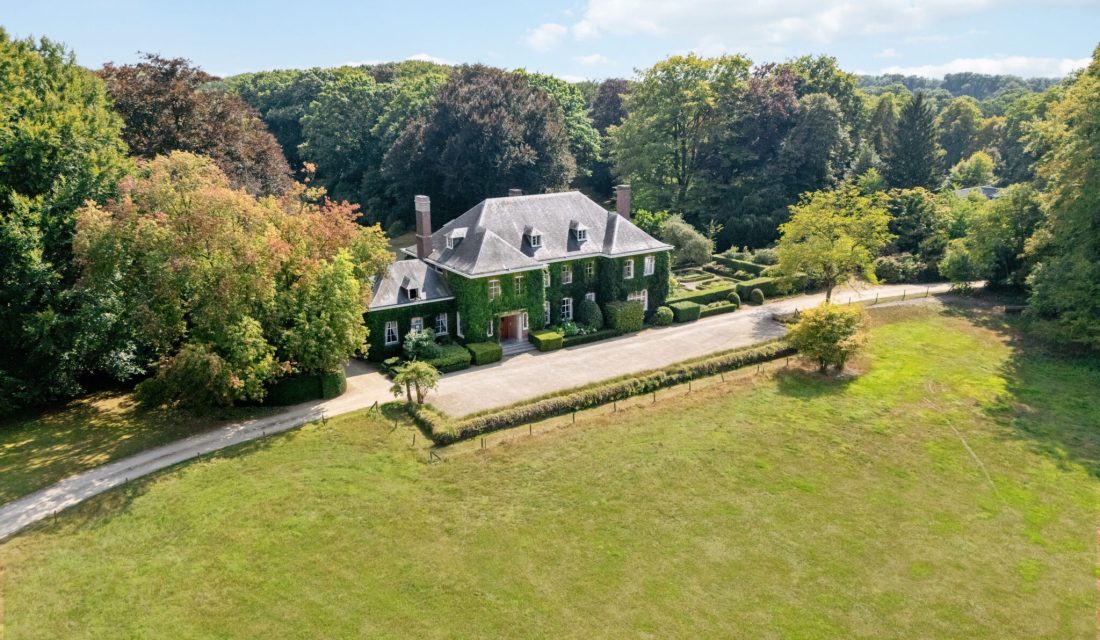
Wetgeving luxevastgoed België
In luxury real estate, legislation often plays a bigger role than in standard residential property. Higher asset values, complex ownership structures, exceptional locations and specific construction characteristics make thorough legal and administrative checks essential. Whether you are buying, selling or investing, a good understanding of the relevant rules helps avoid surprises along the way.
Waarom wetgeving bij luxevastgoed extra belangrijk is
Bij exclusief vastgoed gaat het regelmatig om panden met grotere volumes, bijgebouwen, zwembaden, guesthouses, parkdomeinen, beschermde elementen of een gemengd gebruik. Daardoor volstaat een klassieke controle van prijs, ligging en afwerking zelden. De juridische kwaliteit van het dossier is minstens even bepalend voor de waarde en verhandelbaarheid van het pand.
Vooral deze aandachtspunten keren vaak terug:
- Energieprestaties en renovatieverplichtingen
- Stedenbouwkundige vergunningen en vergunde toestand
- Overstromingsinformatie en andere locatiegebonden lasten
- Fiscale en registratierechtelijke impact per gewest
- Mede-eigendom bij luxeappartementen en penthouses
- Correcte informatieverstrekking in verkoopdocumenten
Belgische vastgoedwetgeving is gewestelijk verschillend
Anyone delving into luxury real estate legislation in Belgium should first understand that a significant share of the property rules is not uniform. Flanders, Brussels and Wallonia each have their own emphasis on, among other things, energy, urban planning, renting, rights of first refusal and registration duties.
In concrete terms, this means that the same type of home can be assessed differently from a legal perspective depending on whether the property is in Knokke, Antwerp, Brussels, Waterloo or the Ardennes. For international buyers and investors this distinction is particularly important, as one often assumes a single Belgian market, whereas in reality the rules can differ markedly by region.
In the Brussels-Capital Region, for example, the Tenants’ right of first refusal in Brussels: new legislation plays a role in transactions involving tenanted properties. In addition, landlords must take into account extra registration and notification obligations.
The main legal points of attention when buying or selling luxury real estate
EPC and renovation obligation
Energy performance is now a central component of property transactions. For residential property, a valid EPC is required upon sale, and in certain cases an unfavorable EPC label may trigger a renovation obligation after transfer, depending on the region. For example, since 1 January 2023 Flanders has a renovation obligation when purchasing residential buildings with EPC label E or F, requiring renovation to at least label D within a set timeframe.
High-end homes often feature larger glazed areas, older character villas, second residences or properties with monumental elements. Precisely there, energy requirements, renovation timelines and technical constraints can have a significant impact on the investment picture. The aesthetic quality of a property does not automatically align with current energy standards.
For buyers it is therefore advisable not only to look at the EPC score, but also at the practical feasibility of any works. For sellers, a complete and transparent energy file is essential to limit discussions during due diligence. See also Due diligence and required documents when purchasing luxury real estate.
Urban planning compliance
For luxury property, the urban planning analysis is often decisive. Think of extensions, pool houses, wellness areas, guesthouses, verandas, garden structures or reconfigured volumes added over the years. The actual situation does not automatically correspond to the permitted situation.
A buyer wants certainty here, especially for high-value property. Key questions include:
- Is the property permitted as it exists today?
- Have later extensions been correctly authorized?
- Are there planning infringements or regularization risks?
- Are there restrictions due to subdivision regulations or spatial zoning?
This is even more important for exclusive properties with potential for redevelopment or expansion. A property’s commercial value often correlates with what remains legally possible on the site. For cases in the south of the country, Urban planning permit reform in Wallonia (from 1 May 2025) provides additional context on environmental and building permits.
Flood risk and location
In top-tier real estate, location is a core factor, but special locations sometimes come with additional regulations. Homes by the water, in green settings or on exceptional plots may be subject to specific disclosure requirements regarding flood risk. In Flanders, sellers and agents must inform prospective buyers about flood susceptibility, and since early 2023 flood scores are also used in property advertisements.
This information is not merely administrative. It can influence how a prospective buyer assesses risk, insurability, future works and the long-term value of the property. Especially in the upper segment, where quality of life and patrimonial security weigh heavily, this is a fundamental point of attention. Relevant environmental obligations upon sale, such as the soil certificate and flood report, are explained in Soil certificate and flood report when selling.
Co-ownership in luxury apartments
With penthouses, high-end apartments and exclusive residences, it is not enough to assess only the private part. The legal and technical condition of the co-ownership also deserves attention. Factors include the co-ownership regulations, decisions of the association of co-owners, planned works and the condition of the common areas.
In addition, EPC obligations for common parts, renovation plans and future costs can affect the attractiveness of the whole. In Flanders, for example, every existing apartment building (not new-build) must have an EPC for the common parts, regardless of sale or rental. For a buyer in the top segment this is relevant because comfort, privacy and building quality are directly linked to the management of the residence.
Registration duties and tax context
The tax treatment of a purchase differs depending on the region, the type of property and its use. With luxury real estate, the amounts are usually substantial, so differences in registration duties or conditions can carry significant financial weight. For example, the rates for a family home vary widely by region (for instance, 2% in Flanders versus around 12.5% in Brussels, depending on the specific conditions and situation).
The analysis is often more nuanced for second homes, investment property, mixed-use buildings or files involving international buyers. While taxation is seldom the only decision point, it is an integral part of proper preparation for a purchase or sale.
Above all, it is important to determine in good time which regime applies to the specific property, rather than starting from general assumptions about “Belgian acquisition costs.” For those active outside Flanders, Registration duties in Wallonia reduced to 3% is also relevant.
Due diligence for luxury real estate: which documents deserve extra attention?
For exclusive property, thorough document control is not a formality but an essential part of the transaction. The exact content of the file differs per property, but these documents usually deserve special attention:
- EPC and any indications of renovation obligations
- Urban planning information and permits
- Cadastral data and title deeds
- Flood information
- Documents of the co-ownership for apartments
- Certificates and mandatory statements in the preliminary agreement and deed
For luxury properties, the factual comparison between documents and reality is also important. A home can look perfectly finished, while the administrative basis is incomplete. That is precisely why careful follow-up of the file is crucial for a smooth transaction.
What does this mean in practice for buyers and sellers?
For buyers
When purchasing luxury real estate, it is wise not to rely solely on appearance, location and finish. The legal quality of the property also determines what you actually acquire. A strong purchase analysis therefore looks not only at market value, but also at the permitted situation, the energy context, any burdens and the practical feasibility of future plans.
For sellers
For owners of exclusive property, a strong sale does not start with publishing the listing, but with a properly prepared file. Complete and consistent information reduces the risk of delays, additional questions or renegotiation along the way. In the luxury segment, where discretion and trust are central, this is particularly important. See the step-by-step guide to selling luxury real estate in Belgium for an overview of the process and the legal checkpoints.
Guidance on regulations and compliant transactions
For complex cases, clear guidance adds value. Especially when it concerns exceptional properties, international buyers or regional regulations, a structured approach helps the process run more smoothly and with greater legal care.
Christie’s Real Estate Belgium regularly shares information about Belgian property regulations and supports owners and buyers throughout the transaction process with a focus on accurate information, compliance and discretion. Those who want to follow recent policy changes will find extra context in the new measures by the government for Belgian real estate. The distinction remains important between property guidance and formal legal advice: for binding legal or tax interpretations, coordination with the competent specialist is recommended.
FAQ
Is there a separate law for luxury real estate in Belgium?
No, there is no separate Belgian law that specifically applies to luxury real estate as a market segment. Luxury property falls under general real estate legislation, supplemented by regional rules on, among other things, energy, urban planning, taxation and disclosure obligations.
Is the renovation obligation also relevant for luxury homes?
Yes, but this is determined regionally. A high-quality property is not automatically exempt from energy obligations. In Flanders, for example, a purchase with EPC label E or F can trigger a renovation obligation; Brussels and Wallonia have different paths and timing.
Why is urban planning so important for exclusive homes?
Because luxury properties more often have extensions and additional facilities such as outbuildings, wellness areas or pool houses. A buyer wants to know whether those components are permitted and whether the actual situation is legally compliant. For cases in the south of the country, recent regulations can provide additional clarification.
Do international buyers have to take different rules into account?
The property rules themselves are in principle linked to the property and the region where it is located. International buyers should pay extra attention to the local procedure, documentation, language, tax context and the correct interpretation of Belgian and regional regulations. In transactions in the capital, for example, the right of first refusal for tenants in Brussels may play a role, while investors with let property would also do well to inform themselves about the double registration of lease agreements in Brussels. For cross-border structures, the Transparency requirement for French SCIs and the newly introduced exit tax is also relevant.
'%3E%3Cg id='Group_551' data-name='Group 551' transform='translate(-74 -5252.672)'%3E%3Cg id='Group_542' data-name='Group 542' transform='translate(910 5353.672)' opacity='0.6'%3E%3Crect id='Rectangle_560' data-name='Rectangle 560' width='2.577' height='11.167' transform='translate(0 4.009)' fill='%23403f4b'/%3E%3Ccircle id='Ellipse_29' data-name='Ellipse 29' cx='1.5' cy='1.5' r='1.5' transform='translate(0.242)' fill='%23403f4b'/%3E%3Cpath id='Path_1184' data-name='Path 1184' d='M463.711,106.255c0-2.971-.643-5.255-4.119-5.255a3.612,3.612,0,0,0-3.25,1.782h-.048v-1.507H453v11.032h3.434v-5.457c0-1.439.273-2.833,2.06-2.833,1.76,0,1.786,1.646,1.786,2.925v5.365h3.432Z' transform='translate(-448.211 -96.989)' fill='%23403f4b'/%3E%3C/g%3E%3C/g%3E%3Cg id='Ellipse_33' data-name='Ellipse 33' transform='translate(820 85)' fill='none' stroke='%23e2e2e4' stroke-width='1'%3E%3Ccircle cx='24' cy='24' r='24' stroke='none'/%3E%3Ccircle cx='24' cy='24' r='23.5' fill='none'/%3E%3C/g%3E%3C/g%3E%3C/svg%3E)
'%3E%3Cg id='Group_552' data-name='Group 552' transform='translate(-53 -5253)'%3E%3Cg id='Group_545' data-name='Group 545' transform='translate(973 5355)' opacity='0.6'%3E%3Cg id='Group_544' data-name='Group 544'%3E%3Cpath id='Path_1186' data-name='Path 1186' d='M719.731,114h3.091v-7.5h2.385l.293-2.643h-2.679v-1.643c0-.584.243-.635.536-.635h2.1v-2.57L722.976,99a2.9,2.9,0,0,0-3.245,3.144v1.714H718V106.5h1.731Z' transform='translate(-718 -99)' fill='%23403f4b'/%3E%3C/g%3E%3C/g%3E%3C/g%3E%3Cg id='Ellipse_32' data-name='Ellipse 32' transform='translate(900 85)' fill='none' stroke='%23e2e2e4' stroke-width='1'%3E%3Ccircle cx='24' cy='24' r='24' stroke='none'/%3E%3Ccircle cx='24' cy='24' r='23.5' fill='none'/%3E%3C/g%3E%3C/g%3E%3C/svg%3E)
'%3E%3Cpath id='Subtraction_1' data-name='Subtraction 1' d='M10379.5,13h0c-.049,0-4.954-.046-6.458-.187-.072-.013-.158-.023-.258-.034a2.847,2.847,0,0,1-1.839-.754,3.952,3.952,0,0,1-.754-1.833A27,27,0,0,1,10370,7.2V5.8a26.984,26.984,0,0,1,.191-2.992,3.966,3.966,0,0,1,.754-1.835,2.667,2.667,0,0,1,1.785-.77h0l.114-.012c2.627-.184,6.606-.187,6.646-.187h.01c.039,0,4.019,0,6.647.187l.113.012h0a2.666,2.666,0,0,1,1.785.77,3.954,3.954,0,0,1,.754,1.835A27.618,27.618,0,0,1,10389,5.8V7.2a27.626,27.626,0,0,1-.189,2.994,3.949,3.949,0,0,1-.754,1.834,2.665,2.665,0,0,1-1.779.771l-.124.013C10383.518,12.991,10379.539,13,10379.5,13Zm-1.962-9.295,0,5.194,5.131-2.588Z' transform='translate(-9375.998 103)' fill='%23403f4b' stroke='rgba(0,0,0,0)' stroke-width='1' opacity='0.6'/%3E%3Cg id='Ellipse_31' data-name='Ellipse 31' transform='translate(980 85)' fill='none' stroke='%23e2e2e4' stroke-width='1'%3E%3Ccircle cx='24' cy='24' r='24' stroke='none'/%3E%3Ccircle cx='24' cy='24' r='23.5' fill='none'/%3E%3C/g%3E%3C/g%3E%3C/svg%3E)
'%3E%3Cg id='Ellipse_30' data-name='Ellipse 30' transform='translate(1062 5657)' fill='none' stroke='%23403f4b' stroke-width='1' opacity='0.15'%3E%3Ccircle cx='24' cy='24' r='24' stroke='none'/%3E%3Ccircle cx='24' cy='24' r='23.5' fill='none'/%3E%3C/g%3E%3Cpath id='Path_1264' data-name='Path 1264' d='M5.027-9.6a3.929,3.929,0,0,1,2.883-1.2,3.9,3.9,0,0,1,2.865,1.178A3.9,3.9,0,0,1,11.953-6.75a3.9,3.9,0,0,1-1.178,2.865A3.9,3.9,0,0,1,7.91-2.707,3.9,3.9,0,0,1,5.045-3.885,3.9,3.9,0,0,1,3.867-6.75,3.872,3.872,0,0,1,5.027-9.6Zm1.02,4.711a2.54,2.54,0,0,0,1.863.773,2.54,2.54,0,0,0,1.863-.773,2.54,2.54,0,0,0,.773-1.863,2.54,2.54,0,0,0-.773-1.863A2.54,2.54,0,0,0,7.91-9.387a2.54,2.54,0,0,0-1.863.773A2.54,2.54,0,0,0,5.273-6.75,2.54,2.54,0,0,0,6.047-4.887ZM12.762-11.6a.8.8,0,0,1,.281.633.943.943,0,0,1-.264.668.856.856,0,0,1-.65.281.913.913,0,0,1-.668-.281.913.913,0,0,1-.281-.668.856.856,0,0,1,.281-.65.943.943,0,0,1,.668-.264A.8.8,0,0,1,12.762-11.6ZM15.75-9.984q.035.949.035,3.234T15.75-3.516A4.848,4.848,0,0,1,14.467-.193a4.724,4.724,0,0,1-3.322,1.248q-.949.07-3.234.07t-3.234-.07a4.825,4.825,0,0,1-3.3-1.266A3.393,3.393,0,0,1,.633-1.2a4.974,4.974,0,0,1-.4-1.09,5.458,5.458,0,0,1-.123-1.23Q.035-4.465.035-6.75t.07-3.27a4.778,4.778,0,0,1,1.266-3.27,4.737,4.737,0,0,1,3.3-1.3q.949-.035,3.234-.035t3.234.035a4.848,4.848,0,0,1,3.322,1.283A4.848,4.848,0,0,1,15.75-9.984ZM14.063-2.109a3.813,3.813,0,0,0,.176-.721q.07-.439.105-1.055t.035-1V-8.613q0-.387-.035-1t-.105-1.055a3.813,3.813,0,0,0-.176-.721A2.537,2.537,0,0,0,12.551-12.9a3.813,3.813,0,0,0-.721-.176q-.439-.07-1.055-.105t-.984-.035H6.047q-.387,0-1,.035t-1.055.105a3.813,3.813,0,0,0-.721.176,2.537,2.537,0,0,0-1.512,1.512,3.813,3.813,0,0,0-.176.721q-.07.439-.105,1.055t-.035.984v3.375q0,.334.018.861t.053.9q.035.369.105.756t.141.633A2.665,2.665,0,0,0,3.27-.6a3.813,3.813,0,0,0,.721.176q.439.07,1.055.105t.984.035H9.773q.387,0,1-.035T11.83-.422A3.813,3.813,0,0,0,12.551-.6,2.665,2.665,0,0,0,14.063-2.109Z' transform='translate(1077.965 5687.625)' fill='%23403f4b' opacity='0.6'/%3E%3C/g%3E%3C/svg%3E)
' fill='%23403f4b'/%3E%3C/svg%3E)