
'%3E%3Cpath id='Path_1190' data-name='Path 1190' d='M0,0H33.5' transform='translate(1803.5 55.667)'/%3E%3Cpath id='Path_1190_-_Outline' data-name='Path 1190 - Outline' d='M33.5.5H0v-1H33.5Z' transform='translate(1803.5 55.667)'/%3E%3Cpath id='Line_11' data-name='Line 11' d='M33.5.5H0v-1H33.5Z' transform='translate(1803.5 68.667)'/%3E%3Cpath id='Line_7' data-name='Line 7' d='M33.5.5H0v-1H33.5Z' transform='translate(1803.5 42.667)'/%3E%3C/g%3E%3C/svg%3E%0A)
'%3E%3Cpath id='Line_69' data-name='Line 69' d='M31.646,32.354l-32-32L.354-.354l32,32Z' transform='translate(1878.5 10.5)'/%3E%3Cpath id='Line_70' data-name='Line 70' d='M.354,32.354l-.707-.707,32-32,.707.707Z' transform='translate(1878.5 10.5)'/%3E%3C/g%3E%3C/svg%3E)
The background
In 1766, a young Scotsman, James Christie, established his first permanent auction rooms at 83–84 Pall Mall in London. His first auction in these rooms included a pair of sheets, two pillowcases, two po’s and four pieces of Indian glassware. At his next auction, a bespoke coffin, which the recently recovered consignor no longer required, was sold alongside live pigs and poultry. With his characteristic ingenuity, Christie soon shifted the focus from practical items and general household goods to objects of desire and beauty.
Less than six months later, on 20 March 1767, he held his first auction devoted entirely to paintings.
It was not just the nature of his sales that set Christie apart: he transformed the atmosphere, brought greater transparency to the auction process and adopted a new approach to holding auctions. Before Christie, auctions were largely mundane affairs – the auctioneer’s role was viewed purely as administrative. Christie turned auctioning into an art form. For Christie, auctioning was a performance; his Rostrum was his stage, and he was rewarded with success.
James Christie’s 50-year-old foundation has helped to build a sustainable business
When he died in 1803, James Christie had held many notable auctions during his 50-year career, which he had begun in the early 1750s with the auctioneer Mr Annesely in Covent Garden.
Christie’s engaging charisma forged close friendships with the intellectual, aristocratic and artistic elite of his time. In 1778, Christie acted as broker in the company’s very first private sale: the collection of Sir Robert Walpole, Britain’s first ‘prime minister’, to Empress Catherine the Great. It was also during this period that James Christie began organising single-owner sales, using the consignor’s reputation to stimulate interest in and the successful sale of their collection.
Christie's in Belgium
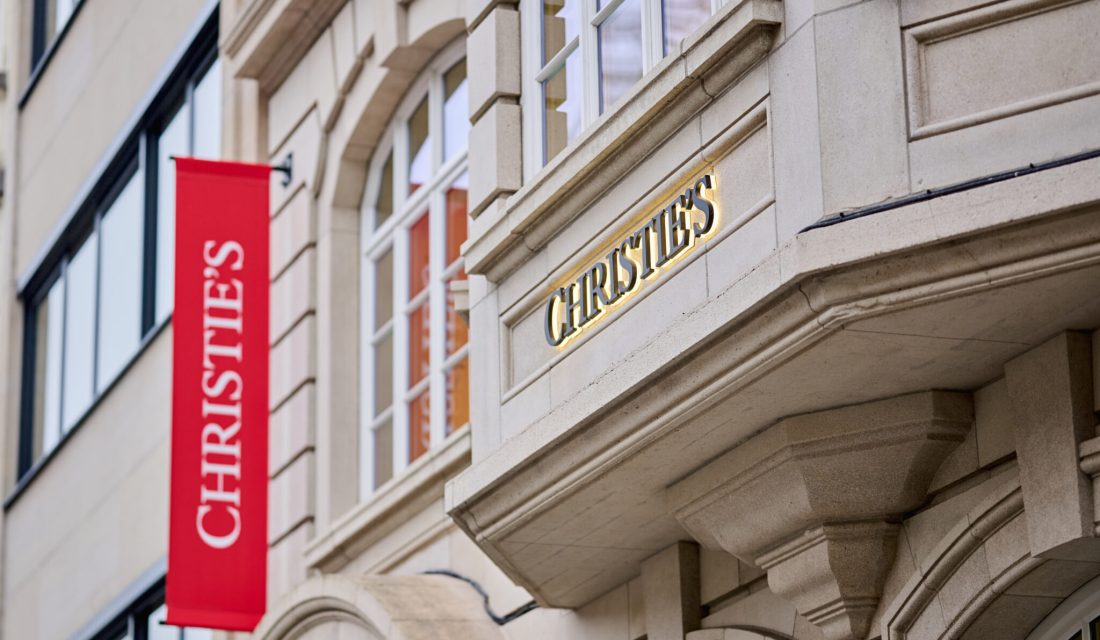
Christie’s Brussels was founded 50 years ago on the enduring foundations, principles and values that James Christie established and put into practice for his auction house 260 years ago.
Over the past five decades, Christie’s Brussels has been commissioned to auction many important Belgian private and corporate collections.
Recently, in March 2026, Christie’s Brussels auctioned works from the collection of Roger and Josette Vanthournout. A Belgian couple whose shared passion for art shaped their collecting over more than sixty years. Roger, trained in design and decoration, approached art with an architect’s eye; Josette, a painter with a refined sense of colour and composition, brought an artist’s sensitivity to every purchase. Together, they embodied the Belgian tradition of openness to the outside world – a spirit rooted in the country’s history as a cultural and commercial crossroads. Their taste was constantly evolving: early interests in Chinese ceramics and Flemish Expressionism gave way to Surrealism, Minimalism and leading movements in post-war European and American art.
Parts of the Proximus corporate collection – a selection of 70 works – were sold in 2024, and the proceeds were used to fund further acquisitions, with a particular focus on digital art and young artists at the start of their careers.
In 2022, the Le Jeune collection went under the hammer, including a magnificent painting by Luc Tuymans, which now hangs at La Bourse du Commerce in Paris, home to the Pinault collection. The Pinault family has owned Christie’s since 1998.
In early 2016, part of the art collection belonging to the renowned Belgian minimalist architect Marc Corbiau was sold at Christie’s in London. He had built up an impressive art collection of international standing, featuring works by renowned artists such as Yves Klein, Lucio Fontana, Donald Judd, Robert Mangold, Richard Serra, Frank Stella and Jan Schoonhoven.
In 1999, Stéphane Janssen’s collection of contemporary art was auctioned. Many of the works on offer had previously been on display at the Louisiana Museum in Denmark, which had dedicated the very first exhibition to this major private collection in 1986. Janssen bought his first work of art in 1952, at the age of 16, in Oscar Dominguez’s studio in the south of France for a sum equivalent to €25 today. When his partner died in 1993, Stéphane Janssen could no longer continue collecting in the same way; it made him too sad, which resulted in the sale of many works. He then turned his attention to photography and built up an impressive new collection.
In 1803, James Christie’s son, James Christie II (1773–1831), took over the running of the business, and in 1823 he moved Christie’s head office to 8 King Street, where it has been based ever since. The longest house auction in history took place in 1848 at Stowe House, when the the 2nd Duke of Buckingham and Chandos had spectacularly increased his inherited debts until the annual interest payments exceeded his income; he commissioned Christie’s to hold a 40-day auction of his property.
In Belgium, Christie’s Brussels was commissioned by Paul de Grande when he sold items from his Snellegem Castle in 1995. Two years later, a house auction was held at Rumbeke Castle, one of the oldest Renaissance castles in Belgium.
In 2004, Christie’s Brussels organised the most recent estate sale in Belgium at Van’s-Gravenwezel Castle, when Axel Vervoordt selected 1,000 items from his incredible collection for the auction. Most estate sales are prompted by a move. In Axel Vervoordt’s case, the opposite was true. After the auction, which was more like a huge open-house festival at the château, he remained an antiquarian through and through.
Worldwide in the 1970s
In the 1970s, Christie’s demonstrated that the founder’s innovative spirit remained a driving force within the company, which was by then 200 years old. In 1968, Christie’s opened its first auction house outside the United Kingdom in Geneva, primarily for the sale of jewellery, and established an office in Paris in the former studio of Max Ernst. The 1970s were a period of major expansion, during which offices and auction rooms were opened in Hong Kong, Bangkok, Amsterdam, Brussels, Jakarta, Stockholm, Singapore, Monaco, Kuala Lumpur, Madrid, Seoul and New York, with a full-scale auction room following in 1977. Today, Christie’s has a presence in 46 countries.
The art market in the 1970s and today
The art market experienced tremendous growth in the 1970s. Since the end of the 18th century, the vast majority of buyers at Christie’s auctions had been gallery owners and art dealers. Now, private collectors were also beginning to attend the auctions. In 1973 alone, turnover rose by 70 per cent compared with the previous year. In 1970, Velázquez’s Portrait of Juan de Pareja was sold in London for £2,310,000 to the Metropolitan Museum in New York. It was the first work to be sold at auction for more than £1,000,000.
Fifty years later, in 2025, Christie’s annual turnover stood at $6.2 billion, of which $4.7 billion came from auction sales and $1.5 billion from private sales. The best-performing department is the one that James Christie first established in 1768: the modern and contemporary art department, which alone generated $2.8 billion, followed by the luxury department with $800 million, including the highest price ever paid for a piece of jewellery at auction: $25.6 million for the Mellon Blue diamond.
'%3E%3Cg id='Group_551' data-name='Group 551' transform='translate(-74 -5252.672)'%3E%3Cg id='Group_542' data-name='Group 542' transform='translate(910 5353.672)' opacity='0.6'%3E%3Crect id='Rectangle_560' data-name='Rectangle 560' width='2.577' height='11.167' transform='translate(0 4.009)' fill='%23403f4b'/%3E%3Ccircle id='Ellipse_29' data-name='Ellipse 29' cx='1.5' cy='1.5' r='1.5' transform='translate(0.242)' fill='%23403f4b'/%3E%3Cpath id='Path_1184' data-name='Path 1184' d='M463.711,106.255c0-2.971-.643-5.255-4.119-5.255a3.612,3.612,0,0,0-3.25,1.782h-.048v-1.507H453v11.032h3.434v-5.457c0-1.439.273-2.833,2.06-2.833,1.76,0,1.786,1.646,1.786,2.925v5.365h3.432Z' transform='translate(-448.211 -96.989)' fill='%23403f4b'/%3E%3C/g%3E%3C/g%3E%3Cg id='Ellipse_33' data-name='Ellipse 33' transform='translate(820 85)' fill='none' stroke='%23e2e2e4' stroke-width='1'%3E%3Ccircle cx='24' cy='24' r='24' stroke='none'/%3E%3Ccircle cx='24' cy='24' r='23.5' fill='none'/%3E%3C/g%3E%3C/g%3E%3C/svg%3E)
'%3E%3Cg id='Group_552' data-name='Group 552' transform='translate(-53 -5253)'%3E%3Cg id='Group_545' data-name='Group 545' transform='translate(973 5355)' opacity='0.6'%3E%3Cg id='Group_544' data-name='Group 544'%3E%3Cpath id='Path_1186' data-name='Path 1186' d='M719.731,114h3.091v-7.5h2.385l.293-2.643h-2.679v-1.643c0-.584.243-.635.536-.635h2.1v-2.57L722.976,99a2.9,2.9,0,0,0-3.245,3.144v1.714H718V106.5h1.731Z' transform='translate(-718 -99)' fill='%23403f4b'/%3E%3C/g%3E%3C/g%3E%3C/g%3E%3Cg id='Ellipse_32' data-name='Ellipse 32' transform='translate(900 85)' fill='none' stroke='%23e2e2e4' stroke-width='1'%3E%3Ccircle cx='24' cy='24' r='24' stroke='none'/%3E%3Ccircle cx='24' cy='24' r='23.5' fill='none'/%3E%3C/g%3E%3C/g%3E%3C/svg%3E)
'%3E%3Cpath id='Subtraction_1' data-name='Subtraction 1' d='M10379.5,13h0c-.049,0-4.954-.046-6.458-.187-.072-.013-.158-.023-.258-.034a2.847,2.847,0,0,1-1.839-.754,3.952,3.952,0,0,1-.754-1.833A27,27,0,0,1,10370,7.2V5.8a26.984,26.984,0,0,1,.191-2.992,3.966,3.966,0,0,1,.754-1.835,2.667,2.667,0,0,1,1.785-.77h0l.114-.012c2.627-.184,6.606-.187,6.646-.187h.01c.039,0,4.019,0,6.647.187l.113.012h0a2.666,2.666,0,0,1,1.785.77,3.954,3.954,0,0,1,.754,1.835A27.618,27.618,0,0,1,10389,5.8V7.2a27.626,27.626,0,0,1-.189,2.994,3.949,3.949,0,0,1-.754,1.834,2.665,2.665,0,0,1-1.779.771l-.124.013C10383.518,12.991,10379.539,13,10379.5,13Zm-1.962-9.295,0,5.194,5.131-2.588Z' transform='translate(-9375.998 103)' fill='%23403f4b' stroke='rgba(0,0,0,0)' stroke-width='1' opacity='0.6'/%3E%3Cg id='Ellipse_31' data-name='Ellipse 31' transform='translate(980 85)' fill='none' stroke='%23e2e2e4' stroke-width='1'%3E%3Ccircle cx='24' cy='24' r='24' stroke='none'/%3E%3Ccircle cx='24' cy='24' r='23.5' fill='none'/%3E%3C/g%3E%3C/g%3E%3C/svg%3E)
'%3E%3Cg id='Ellipse_30' data-name='Ellipse 30' transform='translate(1062 5657)' fill='none' stroke='%23403f4b' stroke-width='1' opacity='0.15'%3E%3Ccircle cx='24' cy='24' r='24' stroke='none'/%3E%3Ccircle cx='24' cy='24' r='23.5' fill='none'/%3E%3C/g%3E%3Cpath id='Path_1264' data-name='Path 1264' d='M5.027-9.6a3.929,3.929,0,0,1,2.883-1.2,3.9,3.9,0,0,1,2.865,1.178A3.9,3.9,0,0,1,11.953-6.75a3.9,3.9,0,0,1-1.178,2.865A3.9,3.9,0,0,1,7.91-2.707,3.9,3.9,0,0,1,5.045-3.885,3.9,3.9,0,0,1,3.867-6.75,3.872,3.872,0,0,1,5.027-9.6Zm1.02,4.711a2.54,2.54,0,0,0,1.863.773,2.54,2.54,0,0,0,1.863-.773,2.54,2.54,0,0,0,.773-1.863,2.54,2.54,0,0,0-.773-1.863A2.54,2.54,0,0,0,7.91-9.387a2.54,2.54,0,0,0-1.863.773A2.54,2.54,0,0,0,5.273-6.75,2.54,2.54,0,0,0,6.047-4.887ZM12.762-11.6a.8.8,0,0,1,.281.633.943.943,0,0,1-.264.668.856.856,0,0,1-.65.281.913.913,0,0,1-.668-.281.913.913,0,0,1-.281-.668.856.856,0,0,1,.281-.65.943.943,0,0,1,.668-.264A.8.8,0,0,1,12.762-11.6ZM15.75-9.984q.035.949.035,3.234T15.75-3.516A4.848,4.848,0,0,1,14.467-.193a4.724,4.724,0,0,1-3.322,1.248q-.949.07-3.234.07t-3.234-.07a4.825,4.825,0,0,1-3.3-1.266A3.393,3.393,0,0,1,.633-1.2a4.974,4.974,0,0,1-.4-1.09,5.458,5.458,0,0,1-.123-1.23Q.035-4.465.035-6.75t.07-3.27a4.778,4.778,0,0,1,1.266-3.27,4.737,4.737,0,0,1,3.3-1.3q.949-.035,3.234-.035t3.234.035a4.848,4.848,0,0,1,3.322,1.283A4.848,4.848,0,0,1,15.75-9.984ZM14.063-2.109a3.813,3.813,0,0,0,.176-.721q.07-.439.105-1.055t.035-1V-8.613q0-.387-.035-1t-.105-1.055a3.813,3.813,0,0,0-.176-.721A2.537,2.537,0,0,0,12.551-12.9a3.813,3.813,0,0,0-.721-.176q-.439-.07-1.055-.105t-.984-.035H6.047q-.387,0-1,.035t-1.055.105a3.813,3.813,0,0,0-.721.176,2.537,2.537,0,0,0-1.512,1.512,3.813,3.813,0,0,0-.176.721q-.07.439-.105,1.055t-.035.984v3.375q0,.334.018.861t.053.9q.035.369.105.756t.141.633A2.665,2.665,0,0,0,3.27-.6a3.813,3.813,0,0,0,.721.176q.439.07,1.055.105t.984.035H9.773q.387,0,1-.035T11.83-.422A3.813,3.813,0,0,0,12.551-.6,2.665,2.665,0,0,0,14.063-2.109Z' transform='translate(1077.965 5687.625)' fill='%23403f4b' opacity='0.6'/%3E%3C/g%3E%3C/svg%3E)
' fill='%23403f4b'/%3E%3C/svg%3E)